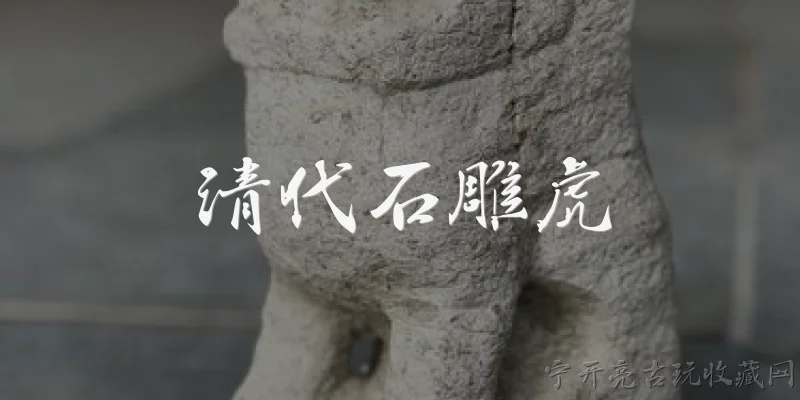
Qing Dynasty Stone Tiger Sculpture:What is the historical significance of Qing Dynasty stone tiger sculptures?
Q: What is the historical significance of Qing Dynasty stone tiger sculptures?
A: Qing Dynasty stone tiger sculptures hold significant historical value as they reflect the artistic and cultural priorities of China's last imperial dynasty (1644–1912). Unlike earlier dynasties where tiger sculptures often symbolized military might, Qing examples frequently served as guardian figures for tombs, temples, and official residences. They were believed to ward off evil spirits and protect the deceased or living occupants. The Qing court's patronage of stone carving workshops, especially in regions like Qufu and Beijing, led to a standardized yet regionally varied style. These sculptures also provide insight into the era's craftsmanship, religious syncretism, and social hierarchy, as only wealthy officials or nobles could afford large, elaborate pieces. Additionally, they document the transition from Ming realism to Qing decorative exuberance. Today, they are studied by historians and art experts to understand funerary practices, Daoist and Buddhist influences, and the symbolic language of animals in late imperial China.
Q: How can you distinguish a genuine Qing Dynasty stone tiger sculpture from a modern replica?
A: Distinguishing a genuine Qing Dynasty stone tiger sculpture from a modern replica requires close examination of material, wear patterns, and stylistic details. Authentic pieces are typically carved from limestone, marble, or sandstone that shows natural weathering—such as patina, micro-cracks, and mineral staining—accumulated over centuries. Modern replicas often use softer, uniform stone or cast concrete, with artificially induced aging that looks too consistent. Tool marks also differ: Qing carvers used hand chisels, leaving irregular, slightly wavy grooves, while modern power tools create precise, repetitive cuts. Stylistically, genuine tigers have proportions and facial features characteristic of the period—often more stylized, with rounded eyes and a curving tail—whereas replicas may mix elements from different dynasties. Additionally, check for historical provenance, such as excavation records or old collection labels. Scientific methods like thermoluminescence dating can confirm age, but visual inspection by a specialist remains key. Be wary of pieces with pristine surfaces or overly sharp details, as these are common signs of recent manufacture.
Q: Where are some notable Qing Dynasty stone tiger sculptures located today?
A: Notable Qing Dynasty stone tiger sculptures can be found in several key locations across China, often in their original contexts or major museums. The most famous examples are at the Ming and Qing imperial tombs near Beijing, particularly the Western Qing Tombs in Hebei Province, where pairs of stone tigers line the Spirit Way leading to emperors' mausoleums. These are large, imposing figures carved from marble. In Qufu, Shandong—the hometown of Confucius—the Kong family cemetery features Qing-era stone tigers guarding tombs of descendants. The Confucius Museum in Qufu also displays several. Beijing's Palace Museum (Forbidden City) holds smaller sculptural tigers used in courtyard decorations. Additionally, the Shanghai Museum and the Nanjing Museum have fine examples in their stone sculpture galleries. Outside of China, the Metropolitan Museum of Art in New York and the British Museum in London own Qing stone tigers acquired through early 20th-century collections. Regional museums in Shanxi and Shaanxi provinces also preserve local variants. Visiting these sites offers a chance to see the sculptures in situ, understanding their original placement and function within funerary or architectural ensembles.
Words of experience
Common scenarios of "Qing Dynasty Stone Tiger Sculpture"
【Tourist】 Hello! I'm visiting this ancient temple for the first time. That stone tiger by the gate looks really old. Can you tell me about it?
【Guide】 Welcome! You're right—this stone tiger dates back to the Qing Dynasty, probably around the Qianlong period. It's carved from a single block of bluestone and has been standing guard here for over two centuries.
【Tourist】 Wow, that's impressive. Why a tiger instead of the usual lions or dragons?
【Guide】 In Chinese culture, the tiger is a symbol of power, courage, and protection against evil spirits. Unlike lions, which are often associated with Buddhism, tigers have a strong presence in Daoist and folk beliefs. This temple was originally a Daoist shrine, so a stone tiger was a natural choice.
【Tourist】 I see. The carving style looks quite distinctive. What can you tell me about the craftsmanship?
【Guide】 Notice the bold, simplified lines and the slightly rounded features. Qing Dynasty stone carving, especially from the mid-to-late period, often emphasized expressive forms over realistic detail. The tiger's eyes are carved with a fierce yet calm gaze, and its stripes are incised rather than deeply sculpted.
【Tourist】 Are there any legends or stories connected to this specific tiger?
【Guide】 Yes, there's a local legend. It's said that during a drought in the late 18th century, the villagers prayed to this tiger for rain. The next day, a sudden storm came. Since then, people have left small offerings at its feet during festivals.
【Tourist】 That's fascinating. Has the sculpture ever been damaged or restored?
【Guide】 It has weathered a lot. The left ear was chipped during the Cultural Revolution, and there are some cracks from freeze-thaw cycles. In 2005, a team of conservators cleaned it and stabilized the cracks, but they deliberately left the ear as is to preserve its history.
【Tourist】 I notice the tiger is facing a certain direction. Does that have meaning?
【Guide】 Good eye! It faces east, toward the rising sun. In feng shui, that direction symbolizes renewal and protection. It's also aligned with the temple's main hall, so it acts as a guardian for the entire complex.
【Tourist】 How does this stone tiger compare to other Qing Dynasty stone tigers you've seen?
【Guide】 It's quite unique. Many Qing stone tigers are more stylized or even cartoonish, but this one has a dignified, almost solemn expression. It's also larger than average—about 1.5 meters long. Probably commissioned by a wealthy patron.
【Tourist】 Was it expensive to make back then?
【Guide】 Definitely. Quarrying, transporting, and carving a stone of this size would have required significant resources. It might have taken a team of artisans several months. Only a temple with strong patronage could afford it.
【Tourist】 Are there any other animals or guardian figures around the temple?
【Guide】 Yes, there are two stone lions inside the main gate, and a pair of stone elephants near the rear hall. But the tiger is the only one placed outside, which makes it the first guardian visitors encounter.
【Tourist】 What about the material? Is bluestone common for Qing sculptures?
【Guide】 Bluestone was very common in northern China because it's durable and relatively easy to carve. It also develops a nice patina over time. Marble was more for imperial projects, while bluestone was used for temples and public monuments.
【Tourist】 Does the tiger have any symbolic markings I should look for?
【Guide】 Look at its paws—there are faint cloud motifs carved on them. Clouds represent good fortune and the connection between heaven and earth. Also, the tail curls into a spiral, which is a Daoist symbol for the endless cycle of life.
【Tourist】 I never would have noticed those details. How do you preserve something like this for future generations?
【Guide】 We monitor it regularly for cracks and erosion. We also control visitor access—no touching, and we keep the area dry. In winter, we cover it with a breathable fabric to prevent frost damage. But ultimately, stone will slowly weather; we just try to slow it down.
【Tourist】 Is there any digital record or 3D scan of the tiger?
【Guide】 Yes, in 2018 a local university did a high-resolution 3D scan. You can view it online. It helps researchers study the carving techniques without handling the original.
【Tourist】 That's great. What's the most common question visitors ask about it?
【Guide】 Most people ask if it's a real tiger or a mythical creature. I tell them it's a real tiger, but stylized. Some also ask if it comes alive at night—there's a folk tale about that, but I assure them it's just stone!
【Tourist】 I love that. One last thing: if I wanted to learn more, what resources do you recommend?
【Guide】 Check out the temple's small museum—it has a display on the tiger's history. Also, the book 'Qing Dynasty Stone Sculpture in North China' by Dr. Li Wei has a whole chapter on it. And of course, you can always come back and ask me more questions.
【Tourist】 Thank you so much! I'll definitely look into those. This has been really enlightening.
【Guide】 My pleasure! Enjoy the rest of your visit, and don't forget to say hello to the tiger on your way out.