Qing Dynasty Jade Pendant:What were the common types and designs of Qing Dynasty jade pendants?
Q: What were the common types and designs of Qing Dynasty jade pendants?
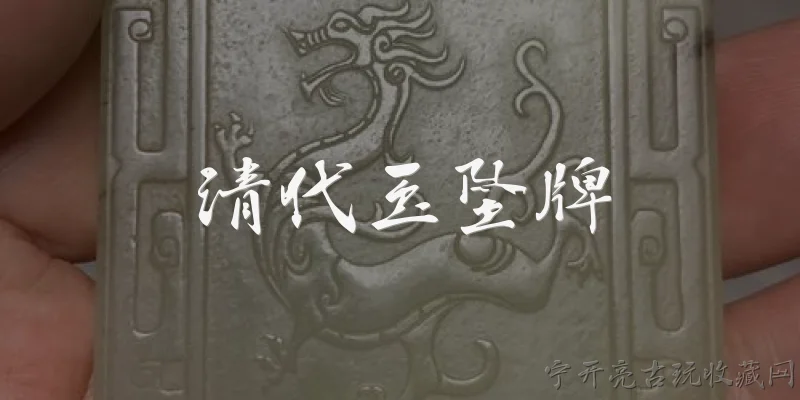
A: Qing Dynasty jade pendants featured diverse designs, often symbolizing auspicious meanings. Common types included dragon and phoenix motifs for harmony, gourd shapes for longevity, and bat designs for blessings. Many pendants were carved with scenes from nature, like bamboo or plum blossoms, representing resilience. They were typically made from white or green jade, with intricate openwork techniques. These pendants served as decorative accessories and status symbols, reflecting the era's artistic sophistication and cultural values.
Q: How was the craftsmanship of Qing Dynasty jade pendants characterized?
A: The craftsmanship of Qing Dynasty jade pendants was highly advanced, featuring meticulous carving and polishing. Artisans used techniques like relief carving and openwork to create detailed patterns, often incorporating auspicious symbols. Tools improved during this period, allowing for finer details and smoother finishes. Jade was carefully selected for quality, with white jade from Khotan being prized. The pendants often showcased imperial styles, especially during the Qianlong reign, emphasizing elegance and symbolic depth, making them masterpieces of Chinese jade art.
Q: What was the cultural significance of Qing Dynasty jade pendants?
A: Qing Dynasty jade pendants held deep cultural significance, symbolizing virtues like benevolence, wisdom, and status. They were worn by both men and women as accessories, often attached to clothing or belts, and were believed to ward off evil. Pendants with motifs like dragons or phoenixes conveyed social rank and auspicious wishes. Additionally, they played a role in rituals and gift-giving, representing respect and harmony. This reflects the Confucian emphasis on jade's moral qualities, making them more than mere ornaments but carriers of cultural identity.
Q: Who typically owned and used jade pendants during the Qing Dynasty?
A: Jade pendants in the Qing Dynasty were primarily owned by the wealthy elite, including emperors, nobles, and scholars. The imperial court, especially under Emperor Qianlong, highly valued jade, and pendants were part of official attire to denote rank. Scholars and merchants also wore them to display refinement and wealth. Commoners had limited access due to the high cost and rarity of quality jade. Thus, these pendants served as markers of social stratification, with ownership restricted to those of higher status.
Q: Are Qing Dynasty jade pendants valuable in modern collections?
A: Yes, Qing Dynasty jade pendants are highly valuable in modern collections due to their historical and artistic merit. Authentic pieces, especially those from the Qianlong period, can fetch high prices at auctions. Factors like jade quality, carving intricacy, and provenance determine value. Collectors prize them for their cultural significance and craftsmanship. However, forgeries are common, so authentication by experts is crucial. Museums and private collectors often seek these pendants, reflecting their enduring appeal as tangible links to China's imperial past.
Dialogue about
Common scenarios of "Qing Dynasty Jade Pendant"
【Collector】 Hello, Professor. I recently acquired a jade pendant that is said to be from the Qing Dynasty. Could you help me authenticate it?
【Professor】 Of course. May I take a look? Qing Dynasty jade pendants are quite diverse in style and material. Can you provide some background on how you obtained it?
【Collector】 I bought it at an auction. The catalog claimed it was from the Qianlong period, carved from Hetian white jade. Here it is.
【Professor】 Interesting. Let me examine it under this magnifying glass. The color is indeed a creamy white, typical of Hetian jade. But we need to check the carving details and patina.
【Collector】 What specific features should I look for to confirm its authenticity?
【Professor】 First, the carving style. Qianlong period jade carvings are known for their fine details and smooth lines. This pendant has a dragon motif, which was popular. But the dragon's scales seem a bit rough. Also, the patina: genuine old jade develops a subtle luster over time. This one looks somewhat new.
【Collector】 So you think it might be a later imitation?
【Professor】 Possibly. Let's also consider the shape. Qing pendants often have symmetrical designs and a hole for hanging. This one has a hole, but the edges are slightly uneven. Could be hand-carved, but also could be modern tools.
【Collector】 Is there a way to test the material to see if it's really Hetian jade?
【Professor】 Yes, we can check the specific gravity and refractive index. Hetian jade has a density of about 2.95 and a refractive index of 1.61. But that requires lab equipment. Alternatively, we can look at the internal structure under a microscope. Hetian jade has a fibrous interlocking structure.
【Collector】 I see. I might take it to a lab. But based on your visual inspection, what's your preliminary assessment?
【Professor】 My preliminary assessment is that it could be from the late Qing or early Republic period, or even a modern replica. The quality of the jade is good, but the carving lacks the refinement of imperial workshops. Also, the patina is not consistent with centuries of handling.
【Collector】 That's disappointing. I paid a high price for it. Are there any other clues, like the color of the cord or the box it came in?
【Professor】 The cord is a modern synthetic material, which is a red flag. Original Qing pendants often had silk cords, but those would have deteriorated. The box might be original, but it's easy to fake. Do you have the provenance documents?
【Collector】 Yes, the auction provided a certificate claiming it was from a private collection in Beijing. But certificates can be forged.
【Professor】 Indeed. I recommend you consult a specialist in Qing jade at a museum. They can do a more thorough examination. Also, check for any museum records or exhibition history.
【Collector】 Thank you, Professor. I'll do that. In the meantime, is there anything I can do to preserve it?
【Professor】 Keep it away from direct sunlight and extreme temperatures. Handle it with clean hands to avoid oils. And don't clean it with chemicals; just a soft cloth.
【Collector】 I'll follow your advice. I appreciate your help. If it turns out to be authentic, I'll let you know.
【Professor】 You're welcome. I hope it turns out to be a genuine piece. Feel free to reach out if you have more questions.