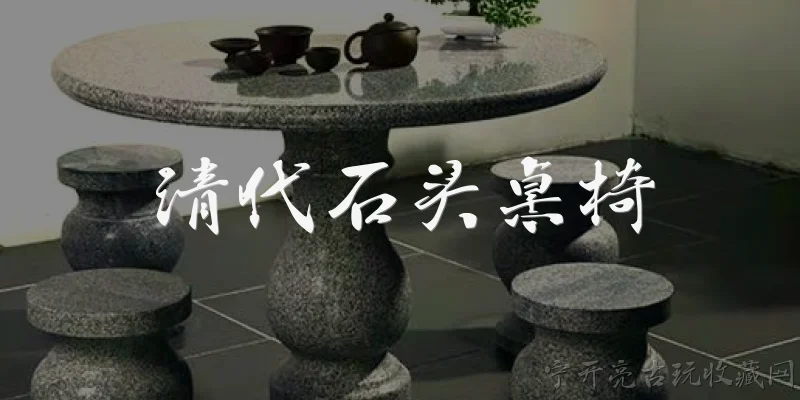
Qing Dynasty Stone Table and Chairs:What makes Qing Dynasty stone tables and chairs valuable in 2026?
Q: What makes Qing Dynasty stone tables and chairs valuable in 2026?
A: In 2026, Qing Dynasty stone tables and chairs are valued for a combination of historical scarcity, craftsmanship, and material integrity. The Qing period (1644–1912) saw refined stone furniture produced for scholars' gardens, temple courtyards, and wealthy estates, often carved from limestone, marble, or sandstone. Genuine pieces from this era are increasingly rare because many were destroyed during the 20th-century upheavals, and surviving examples with original tool marks and patina command premium prices. Collectors also prize them for the aesthetic of 'scholar's rocks' and literati garden culture, which remains influential in contemporary Chinese design. The market in 2026 shows strong demand from private museums, boutique hotels, and interior designers seeking authentic Ming-Qing garden elements. Authentication now often involves thermoluminescence testing and comparative analysis of carved motifs such as cloud scrolls, lotus petals, and dragon roundels. Condition matters: pieces with minimal restoration, stable stone, and intact structural joinery are worth significantly more. Auction records in Hong Kong and Beijing indicate that a matched set of a stone table with four drum-shaped stools can reach five to seven figures in HKD, depending on provenance and carving quality.
Q: How can I identify authentic Qing Dynasty stone tables and chairs versus modern reproductions?
A: To identify authentic Qing Dynasty stone tables and chairs in 2026, start with tool marks and surface wear. Original pieces typically show hand-chiseled striations that are irregular and directional, while modern reproductions often have uniform, machine-cut surfaces or sandblasted finishes. Examine the edges: authentic pieces have softened, rounded corners from centuries of weathering, not sharp, freshly cut edges. Patina is another key indicator—genuine stone develops a subtle, uneven sheen and mineral staining that cannot be faked easily; acid-etched or stained replicas often look too uniform. Carved motifs should match Qing repertoire: cloud scrolls, lotus petals, stylized dragons, and auspicious characters. Compare proportions—Qing tables are often lower and more sturdy than later copies. Joinery is crucial: original tenon-and-mortise joints in stone are rare and precise, whereas modern versions may use hidden metal pins or epoxy. Provenance documents, such as old photographs, family records, or temple inventories, add confidence. In 2026, portable XRF and microscopy are used by specialists to analyze mineral composition and micro-wear. Finally, weigh the piece: ancient stone is usually denser and heavier than modern cast or composite replicas. If in doubt, consult a reputable dealer or an appraiser specializing in Chinese garden antiques.
Q: Where can I buy or sell Qing Dynasty stone tables and chairs in 2026?
A: In 2026, the primary channels for buying or selling Qing Dynasty stone tables and chairs are specialized auction houses, reputable antique dealers, and curated online platforms. Major auction houses in Hong Kong, Beijing, and London regularly include Chinese garden furniture in their classical Chinese art sales; live and online bidding is standard, with condition reports and provenance documentation available. Established dealers in cities like Shanghai, Taipei, and San Francisco focus on Ming-Qing garden antiques and offer authentication services. Online marketplaces such as 1stDibs, Chairish, and specialized WeChat dealer groups also list these pieces, but buyers should insist on detailed photographs, measurements, and independent appraisals. For selling, consignment through an auction house with a strong Chinese art department often yields the best results, though commissions can be 15–25%. Private sales through collectors' networks or museum deaccession programs are another option. In 2026, cross-border shipping requires CITES-like documentation for certain stone types, plus customs clearance; professional crating and insurance are essential. Always verify the seller's return policy and request a written guarantee of authenticity. Reputable dealers will provide provenance, condition notes, and high-resolution images of joinery and carved details.
Dialogue about
Common scenarios of "Qing Dynasty Stone Table and Chairs"
【Antique Collector】 I recently acquired a set of Qing Dynasty stone table and chairs. They're quite heavy and beautifully carved. What do you think about such pieces?
【Historian】 That's fascinating! Qing Dynasty stone furniture is a significant artifact. They were often used in gardens and courtyards of the elite. Can you describe the carvings?
【Antique Collector】 The table has intricate dragon motifs around the edge, and the chairs have cloud patterns on the backrests. The stone is a dark gray, almost black, with a smooth finish.
【Historian】 Dragon motifs suggest it might have been owned by a high-ranking official or even imperial family. Cloud patterns often symbolize good fortune. What's the condition like?
【Antique Collector】 It's in excellent condition, with only minor wear on the seats. I'm trying to determine its exact age. Any tips on dating?
【Historian】 Look for stylistic clues: early Qing carvings are more robust, while late Qing are more ornate. Also, check for any inscriptions or seals that might indicate the maker or date.
【Antique Collector】 I haven't found any inscriptions yet. But the joinery is mortise and tenon, no nails. Does that help?
【Historian】 Absolutely. Mortise and tenon joints were standard in traditional Chinese furniture, but the precision can indicate the period. If it's very precise, it might be early Qing.
【Antique Collector】 I see. Also, the stone has a slight patina that suggests age. How should I care for it to preserve its value?
【Historian】 Keep it out of direct sunlight and extreme temperatures. Clean with a soft brush and avoid chemicals. A stable environment is key.
【Antique Collector】 Thanks. I'm also curious about the cultural significance. Why were stone tables and chairs popular in the Qing Dynasty?
【Historian】 They were status symbols and functional art. Used for tea ceremonies, poetry gatherings, and relaxation. Stone was believed to have spiritual qualities, promoting harmony with nature.
【Antique Collector】 That's interesting. So they weren't just for practical use but also for aesthetic and philosophical reasons.
【Historian】 Exactly. The Qing elite valued the balance of yin and yang, and stone represented stability and permanence. Often, such sets were placed in gardens to blend with the landscape.
【Antique Collector】 I wonder if my set was originally part of a garden. The chairs are quite low, which might suggest outdoor use.
【Historian】 Low chairs were common in garden settings for casual seating. Also, the dragon motif might indicate it was in a scholar's garden or a temple. Have you considered its provenance?
【Antique Collector】 I bought it from a dealer who said it came from a family in Shanxi. But no documentation. I'm planning to get it appraised.
【Historian】 Shanxi is known for its stone carvings. A professional appraisal is wise. Also, check for any museum exhibitions or auctions that featured similar pieces for comparison.
【Antique Collector】 I'll do that. One more thing: how can I tell if the stone is original or if it's been restored?
【Historian】 Look for inconsistencies in color and texture. Original stone will have uniform patina, while restored areas might be lighter or have different tool marks. Also, check the joints for modern adhesives.