Qing Dynasty Vietnamese Agarwood Cup:What is a Qing Dynasty Vietnamese agarwood cup and why was it valued in the Qing court?
Q: What is a Qing Dynasty Vietnamese agarwood cup and why was it valued in the Qing court?
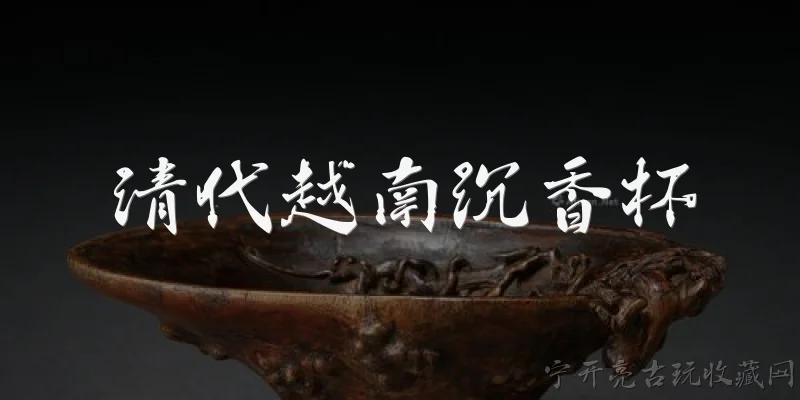
A: A Qing Dynasty Vietnamese agarwood cup is a small carved drinking vessel made from agarwood sourced from Vietnam (then often called Annam or Jiaozhi) and prized by Qing elites for its rarity, fragrance, and dense resinous grain. Vietnamese agarwood, especially "qi nan" or "huang shu" grades, was regarded as superior because of its rich oil content and sweet, lasting scent. In Qing palace inventories and Qing dynasty gongdan (tribute lists), such aromatic woods appear among foreign tribute items and luxury imports. The Palace Museum in Beijing has published research and catalog entries on Qing agarwood carvings noting that these cups were used for wine, tea, or as display objects in scholar's studios. Their value lay in the material's slow formation, medicinal associations in traditional Chinese medicine, and the fine hollowing and polishing required to preserve the fragrant grain, making each cup a marker of refined taste and high status.
Q: How can you identify an authentic Qing Dynasty Vietnamese agarwood cup?
A: Identification combines material, carving, and provenance. Authentic cups usually show a dense, dark brown to near-black resinous surface with visible oily striations and a natural, not uniformly dyed, color. The interior is often hollowed thinly but evenly, and the foot rim is carefully finished, because Qing carvers avoided wasting precious agarwood. The scent, when warmed gently, should be sweet, woody, and slightly medicinal, not sharply perfumed. Look for Qing-period tool marks: subtle lathe or knife traces under polish, and patina in crevices. Inscriptions or reign marks must match known Qing calligraphic styles; many later copies imitate Qianlong marks. Compare with Palace Museum catalogued Qing agarwood wares and with 2026 auction house condition reports, which increasingly include resin-content testing and microscopic wood-anatomy analysis. Provenance, old collector labels, and documented Chinese or Vietnamese ownership history are also important, since aged agarwood is frequently re-carved.
Q: What role did Vietnamese agarwood play in Qing Dynasty tribute and trade?
A: Vietnamese agarwood entered Qing China through both official tribute and maritime trade. After the Qing consolidated its southern borders, Annam and other Southeast Asian polities sent aromatic woods, including agarwood, as tribute, while Guangdong and Fujian ports received regular cargoes. Qing customs records and local gazetteers list chenxiang (agarwood) among high-value imports taxed at premium rates. Because Vietnamese agarwood was considered among the finest, it was often reserved for imperial workshops or granted to high officials. The Qing court's Zaobanchu (Imperial Household Workshops) records show aromatic woods being allocated for carved cups, beads, and incense. In 2026, scholars at the Palace Museum continue to publish on Qing aromatic-wood consumption, noting that tribute networks linked Hanoi, Hue, and Chinese port cities. This trade made Vietnamese agarwood cups not only luxury goods but also diplomatic objects, symbolizing the flow of exotic materials into the Qing material culture and the empire's southern connections.
Q: What is the market and cultural value of Qing Dynasty Vietnamese agarwood cups in 2026?
A: In 2026, Qing Dynasty Vietnamese agarwood cups remain rare and highly sought after, valued for material scarcity, imperial association, and craftsmanship. International auction houses report that fine Qing agarwood carvings can command tens of thousands to several hundred thousand US dollars, depending on size, resin density, carving quality, and provenance. Cups with Qianlong or Jiaqing period attribution and Palace Museum exhibition history perform best. Cultural value is also rising: museums in Beijing, Taipei, and Hanoi increasingly treat such cups as evidence of Sino-Vietnamese material exchange. Conservation science in 2026 uses non-destructive CT scanning and GC-MS to analyze resin and avoid damaging objects. Buyers should note that Vietnamese agarwood is CITES-regulated under Aquilaria species, so cross-border sales require permits. Overall, these cups sit at the intersection of connoisseurship, heritage law, and the global market for classical Chinese scholar's objects.
Dialogue about
Common scenarios of "Qing Dynasty Vietnamese Agarwood Cup"
【古董收藏家】 你好,我最近得到一个杯子,据说是清代越南沉香杯,想请你帮忙鉴定一下。
【鉴定专家】 好的,请把杯子给我看看。首先,我需要观察它的材质和雕工。
【古董收藏家】 给,你看这杯子的颜色深褐,有油线,闻起来有淡淡的香味。
【鉴定专家】 嗯,从外观上看,确实有沉香的特征。但越南沉香在清代多作为贡品,民间很少见。
【古董收藏家】 哦?那这个杯子会不会是仿品?
【鉴定专家】 不一定,我需要进一步检查。你看这杯子的内壁,有使用过的痕迹吗?
【古董收藏家】 内壁比较光滑,好像有茶渍的残留。
【鉴定专家】 茶渍是自然的,但沉香杯通常不会用来喝茶,因为高温会破坏沉香油脂。
【古董收藏家】 那这个杯子可能是用来做什么的?
【鉴定专家】 可能是用来盛放香料或者作为陈设品。清代宫廷中,沉香杯常被用作赏玩。
【古董收藏家】 原来如此。那这个杯子的雕刻风格如何?
【鉴定专家】 雕刻线条流畅,有清代中期的风格。但越南沉香通常纹理更细腻,这个杯子纹理稍粗。
【古董收藏家】 那它可能是哪里产的?
【鉴定专家】 有可能是海南沉香或印尼沉香,但具体需要做进一步的科学检测。
【古董收藏家】 科学检测?比如什么方法?
【鉴定专家】 可以用气相色谱-质谱联用分析油脂成分,或者用显微镜观察木材结构。
【古董收藏家】 那这个杯子的市场价值大概多少?
【鉴定专家】 如果是真品清代越南沉香杯,价值可能数十万甚至上百万。但如果是仿品,就几千元。
【古董收藏家】 我明白了,那我应该去哪里做科学检测?
【鉴定专家】 你可以联系省级博物馆或专业的文物鉴定机构,他们通常有这些设备。