Authentic vs. fake Guangxu gold bricks:What are Guangxu gold bricks and why are they often faked?
Q: What are Guangxu gold bricks and why are they often faked?
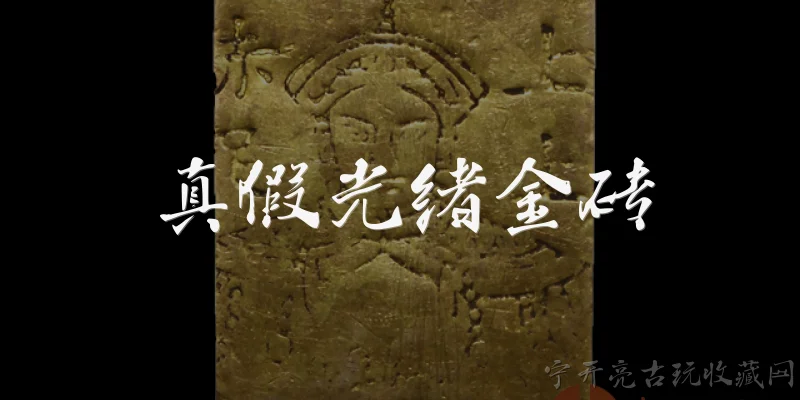
A: Guangxu gold bricks refer to gold ingots purportedly minted during the reign of Emperor Guangxu (1875–1908) of the Qing dynasty, often bearing inscriptions of official mints or imperial workshops. Because genuine examples are rare and highly sought by collectors, they command high prices, which encourages forgery. Modern fakes are frequently made from brass, copper alloys, or gold-plated base metals and given artificial patina. Many are sold as 'treasure finds' or heirlooms without provenance. Genuine Guangxu gold ingots are typically small sycee-style pieces rather than large standardized 'bricks', so claims of massive gold bricks should always be treated with suspicion.
Q: How can you tell an authentic Guangxu gold brick from a fake?
A: Authenticity checks begin with the metal: real gold has a specific density (about 19.3 g/cm³), so weigh and measure the piece to calculate density. Genuine Qing ingots were hand-cast, showing natural flow lines, slight irregularity, and period-appropriate stamps; fakes often look too uniform, have crisp modern lettering, or show casting seams from molds. Patina on real gold is minimal since gold doesn't corrode, so heavy green or black 'aging' is a red flag—likely applied to base metal. Examine inscriptions for period-correct characters, and seek expert authentication, XRF testing, or provenance documentation before purchase.
Q: Why is the density and weight test important for checking Guangxu gold bricks?
A: Gold is unusually dense, so a simple weight-to-volume check is one of the most reliable field tests. Measure the brick's dimensions, calculate volume, and divide weight by volume; authentic gold should approach 19.3 g/cm³ (allowing for alloying, maybe 15–18 for lower-karat pieces). Tungsten-filled or brass fakes often fail this test, weighing noticeably less for their size. Counterfeiters sometimes add a heavy core, so also check for seams or plugs. Combined with a magnet test (gold is non-magnetic) and an acid or electronic tester at a jeweler, density testing quickly screens out most fake Guangxu gold bricks without damaging the item.
Q: What do fake Guangxu gold brick inscriptions and stamps usually look like?
A: Fake inscriptions often mimic Qing mint marks but betray themselves through modern typography: overly neat, machine-stamped characters, simplified or incorrect characters, and inconsistent date references (e.g., mismatched reign years or Western dates). Genuine Guangxu ingots may carry mint names, fineness marks, or silversmith chop marks applied by hand, so stamps vary in depth and alignment. Fakes frequently repeat identical stamps across multiple pieces, show no wear from circulation, and use anachronistic phrasing like 'imperial gold brick' in English. Cross-check any inscription against known Qing mint records and have a numismatic or Chinese antiques expert review photographs before buying.
Q: Where do most fake Guangxu gold bricks come from and how are they sold?
A: Most counterfeit Guangxu gold bricks originate from modern workshops in China and Southeast Asia, often produced for the tourist and online collectibles trade. They are commonly sold through online marketplaces, social media 'treasure hunter' accounts, estate-sale stories, and rural 'farm find' narratives designed to bypass provenance questions. Sellers may claim the brick was dug up, inherited, or rescued from destruction, and price it far below genuine market value to seem like a bargain. Buy only from reputable dealers with written guarantees, insist on independent authentication, and remember that genuine imperial gold ingots are extremely rare—any large gold brick offered casually should be presumed fake until proven otherwise.
Words of experience
Common scenarios of "Authentic vs. fake Guangxu gold bricks"
【Expert】 Hello, I'm glad to discuss the topic of authentic vs. fake Guangxu gold bricks. Many people are curious about how to distinguish them.
【Curious】 Yes, I've seen some so-called Guangxu gold bricks online. They look shiny, but I suspect they might be fake. How can I tell?
【Expert】 First, authentic Guangxu gold bricks were minted during the Guangxu period of the Qing Dynasty. They usually have clear inscriptions, standardized weight, and specific gold content. Fakes often have blurry text and inconsistent weight.
【Curious】 What are the typical inscriptions on genuine ones?
【Expert】 Genuine ones often have 'Guangxu Year Made' or 'Made by Fengtian Mint' etc. The characters are neatly carved, and the gold color is deep and natural. Fakes often have stiff or overly flashy characters.
【Curious】 I've heard that some fakes are made of copper with gold plating. How can I test that?
【Expert】 You can use the specific gravity test. Pure gold has a specific gravity of about 19.3, while copper is only about 8.9. If it's copper with gold plating, the weight will be much lighter. Also, you can check for wear marks; gold-plated items will show the base metal at the edges.
【Curious】 Are there any simple methods for ordinary collectors to identify them?
【Expert】 You can use a magnet. Gold is not magnetic, but many fake materials contain iron or nickel, which will attract a magnet. Also, you can bite it; pure gold is soft and will leave teeth marks, but this is not recommended as it may damage the item.
【Curious】 What about the sound test? I've heard that real gold makes a dull sound when struck.
【Expert】 Yes, genuine gold has a low-pitched, long-lasting sound when struck, while fake gold or gold-plated items have a sharper, shorter sound. However, this requires some experience to judge accurately.
【Curious】 Are there any modern high-tech fakes that are hard to detect?
【Expert】 Indeed, some high-quality fakes use tungsten alloys, which have a specific gravity close to gold, making them hard to distinguish by weight alone. In such cases, you need professional equipment like X-ray fluorescence spectrometers to analyze the composition.
【Curious】 So, for ordinary collectors, what is the most reliable method?
【Expert】 It's best to buy from reputable auction houses or dealers and to have the item authenticated by a professional institution. Additionally, learn more about the historical background and minting characteristics of Guangxu gold bricks to improve your identification skills.
【Curious】 Are there any well-known counterfeit cases?
【Expert】 Yes, there have been cases where counterfeiters used modern technology to imitate the appearance of Guangxu gold bricks and sold them as genuine. These fakes often deceive beginners, so it's important to stay vigilant.
【Curious】 Thank you for your answers. I've learned a lot.
【Expert】 You're welcome. Remember, when collecting, always prioritize authenticity and avoid greed for bargains. If you have any questions, feel free to ask.
【Curious】 I will. Thanks again!