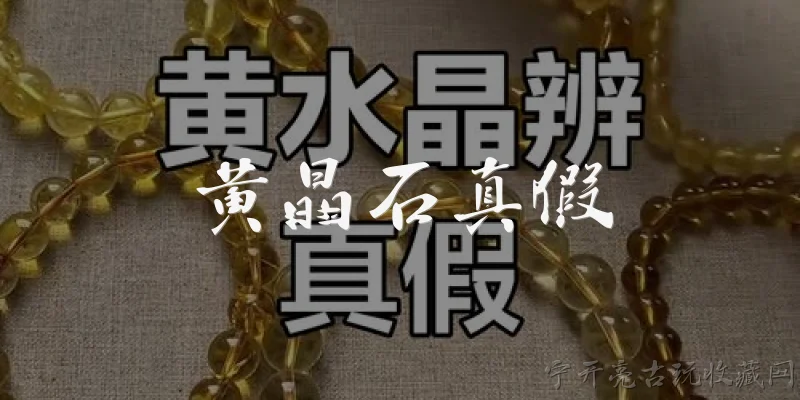
Citrine authenticity:How can I tell if a citrine is authentic or fake?
Q: How can I tell if a citrine is authentic or fake?
A: To determine citrine authenticity, start with color: natural citrine typically has a pale yellow to smoky golden hue, while heat-treated amethyst (often sold as citrine) tends to be reddish-orange or burnt amber. Next, check for inclusions—natural citrine often contains tiny bubbles, fractures, or color zoning, whereas glass or synthetic stones may appear perfectly clear or contain round bubbles. A simple scratch test can help: citrine has a Mohs hardness of 7 and will scratch glass, but glass won't scratch citrine. You can also use a loupe to look for sharp facet edges and natural growth lines. Be cautious of stones labeled 'Madeira citrine' or 'bahia citrine'—these are trade names for heat-treated amethyst, not true natural citrine. Finally, ask for a certificate from a reputable gem lab like GIA or IGI, especially for expensive pieces. If the price seems too low for a large, flawless stone, it's likely synthetic or treated.
Q: What is the difference between natural citrine and heat-treated amethyst?
A: Natural citrine forms when trace amounts of iron are present during quartz crystallization, giving it a pale yellow to light golden color. It is relatively rare and often commands higher prices. Heat-treated amethyst, on the other hand, is amethyst that has been heated to 400–500°C to turn its purple color to yellow-orange or reddish-brown. This treatment is common and widely accepted in the jewelry industry, but it is not the same as natural citrine. Key differences: natural citrine usually has a subtle, smoky or greenish-yellow tone and may show color zoning; heated amethyst often has a more uniform, reddish-orange hue and may retain slight purple tints in certain lighting. Under magnification, heated amethyst may show internal fractures from thermal stress, while natural citrine typically has fine, parallel growth lines. When buying, always ask whether the stone is natural or heated. Reputable sellers will disclose treatments, and a gem lab report can confirm the origin and treatment status.
Q: Does citrine authenticity affect its value and metaphysical properties?
A: Yes, citrine authenticity significantly affects both market value and perceived metaphysical properties. Natural, untreated citrine is rarer and typically more expensive than heat-treated amethyst or synthetic glass. A large, flawless natural citrine can cost several times more than a similar-sized heated stone. For collectors and investors, natural citrine with documented origin and no treatments is more desirable. In metaphysical circles, many believe that natural citrine carries stronger energy for abundance, creativity, and personal power because it is formed by nature without human intervention. Heat-treated amethyst is often considered to have similar but slightly muted properties. However, scientific evidence does not support these claims—the effects are based on personal belief and tradition. If you value authenticity for spiritual reasons, seek natural citrine from reputable sources and ask for a certificate of authenticity. Regardless of origin, citrine is a beautiful gemstone, but knowing its true nature helps you make an informed purchase and avoid overpaying for treated or synthetic material.
Words of experience
Common scenarios of "Citrine authenticity"
【Customer】 Hi, I recently bought a citrine ring online, but I'm worried it might be fake. How can I tell if it's authentic?
【Jeweler】 Hello! I'd be happy to help. First, citrine is a type of quartz, so it should have a hardness of 7 on the Mohs scale. You can try scratching it with a steel file—if it scratches easily, it's likely glass.
【Customer】 I don't want to damage it. Are there other non-destructive tests?
【Jeweler】 Absolutely. Check for inclusions under a magnifying glass. Natural citrine often has tiny bubbles, fractures, or mineral inclusions. Glass or synthetic stones may have perfectly round bubbles or none at all.
【Customer】 I see some tiny bubbles, but they look perfectly round. Is that a bad sign?
【Jeweler】 Yes, perfectly round bubbles are a common sign of glass. Natural citrine inclusions are usually irregular. Also, citrine is pleochroic, meaning it shows different colors from different angles. You can test that with a polariscope.
【Customer】 I don't have a polariscope. Can I just use a flashlight?
【Jeweler】 A flashlight can help you see internal features, but it won't show pleochroism. Another test is to check for color zoning. Natural citrine often has uneven color, while treated amethyst (which is often sold as citrine) may have a burnt orange color with white patches.
【Customer】 Mine is a deep orange with some white areas near the edges. Does that mean it's heated amethyst?
【Jeweler】 It's possible. Heated amethyst is commonly sold as citrine. It's still quartz, but not natural citrine. To be sure, you could take it to a gemologist for a refractive index test. Citrine has a refractive index of about 1.54-1.55.
【Customer】 That sounds complicated. Is there a simpler way to tell if it's real citrine?
【Jeweler】 You can also test for thermal conductivity. Citrine, like other quartz, feels cooler to the touch than glass. But that's not definitive. The most reliable is a gem lab test.
【Customer】 I bought it from a street vendor, so I doubt it came with a certificate. Should I just assume it's fake?
【Jeweler】 Not necessarily. Many street vendors sell real citrine, but it's often treated. If you paid a very low price, it's likely glass or synthetic. Real citrine, especially natural and untreated, is more expensive.
【Customer】 I paid about $30 for a 2-carat stone. Is that reasonable?
【Jeweler】 That's on the lower end. Natural citrine of that size and quality might cost $50-$100 per carat. So it could be treated amethyst or glass. I'd recommend taking it to a local jeweler for a quick check.
【Customer】 Okay, I'll do that. What should I ask them to test for specifically?
【Jeweler】 Ask for a refractive index test and a visual inspection under a microscope. They can also check for pleochroism with a dichroscope. If it's glass, the refractive index will be lower and it may show strain patterns under polarized light.
【Customer】 Thanks for all the info! I feel more prepared now.
【Jeweler】 You're welcome! Remember, even if it's treated, it can still be a beautiful stone. But if you want natural citrine, always buy from a reputable dealer with a certificate. Good luck!