Beijing on Stamps:What are some notable Beijing landmarks featured on stamps?
Q: What are some notable Beijing landmarks featured on stamps?
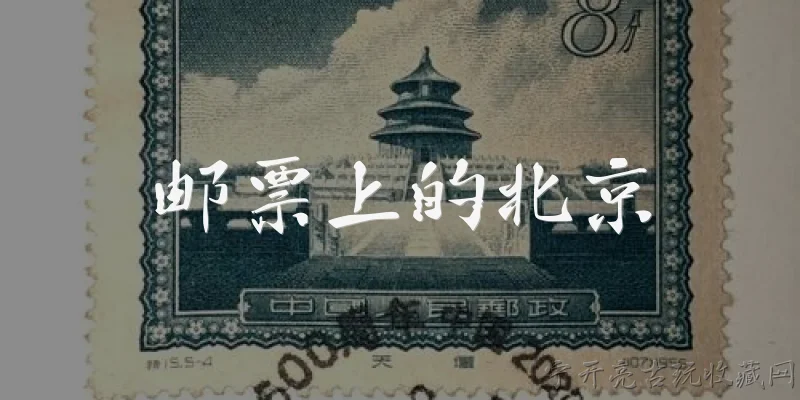
A: Beijing landmarks frequently appear on Chinese stamps, showcasing the city's rich history and culture. The Forbidden City, with its iconic red walls and golden roofs, has been featured multiple times, including a 1985 set commemorating the 600th anniversary of its construction. The Great Wall, though spanning many regions, is often represented by its Badaling section near Beijing, appearing on stamps since the 1950s. Tiananmen Square, a political and cultural symbol, has been depicted on stamps celebrating National Day. The Temple of Heaven, with its distinctive circular architecture, was featured on a 1997 stamp series. Other notable landmarks include the Summer Palace, the Ming Tombs, and the Beijing Olympic Park, which appeared on stamps for the 2008 Summer Olympics, capturing the city's blend of ancient and modern identity.
Q: When were the first stamps featuring Beijing issued?
A: The first stamps featuring Beijing were issued in the late 19th century during the Qing Dynasty. In 1878, the Qing government issued China's first official stamps, known as the Large Dragon stamps, which depicted a dragon but did not specifically feature Beijing. However, Beijing-themed stamps emerged in the early 20th century. For example, in 1913, the Republic of China issued stamps commemorating the founding of the republic, with designs including Tiananmen. After the establishment of the People's Republic of China in 1949, Beijing became a central theme. The first PRC stamps featuring Beijing were issued in 1950, showcasing Tiananmen and other landmarks. Since then, numerous stamps have highlighted Beijing's historical and cultural significance, making them popular among collectors worldwide.
Q: How do Beijing-themed stamps reflect Chinese history and culture?
A: Beijing-themed stamps serve as miniature chronicles of Chinese history and culture. They often depict architectural marvels like the Forbidden City and Temple of Heaven, symbolizing imperial grandeur and traditional cosmology. Stamps commemorating political events, such as the founding of the PRC in 1949, feature Tiananmen, reflecting Beijing's role as the political heart. Cultural stamps showcase Peking Opera, calligraphy, and festivals, preserving intangible heritage. The 2008 Olympics stamps highlight Beijing's modernization and global integration. Additionally, stamps issued during significant anniversaries, like the 60th National Day in 2009, capture patriotic themes. Through these designs, stamps not only honor Beijing's past but also document its evolution, making them valuable educational tools and collectibles that embody China's rich cultural tapestry and historical milestones.
Q: What makes Beijing on stamps a popular collecting theme?
A: Beijing on stamps is a popular collecting theme due to its historical, cultural, and aesthetic appeal. Collectors are drawn to the city's iconic landmarks, such as the Forbidden City and Great Wall, which are beautifully rendered on stamps. The theme offers a wide range of issues, from early Qing Dynasty stamps to modern commemoratives, providing a comprehensive overview of Beijing's evolution. Rarity and historical significance, like stamps from the Cultural Revolution era, add value. Additionally, Beijing-themed stamps often coincide with major events like the Olympics or National Day, creating topical collections. The intricate designs and limited editions Further enhance their desirability. Many collectors appreciate the blend of art and history, making these stamps not only investment pieces but also windows into China's capital, fostering a deeper appreciation for its enduring legacy.
Dialogue about
Common scenarios of "Beijing on Stamps"
【Philatelist】 Hey, have you seen the new stamp set featuring Beijing's hutongs? It's fascinating how they capture the old alleyways.
【Collector】 Yes, I just added it to my collection! The intricate details of the grey bricks and courtyard doors are impressive.
【Philatelist】 I love how stamps can showcase Beijing's blend of tradition and modernity. Like the ones with the Forbidden City and the CBD skyline.
【Collector】 Absolutely. I have a stamp from the 1980s showing Tiananmen Square, and another from 2008 with the Bird's Nest for the Olympics.
【Philatelist】 Those are classics! Do you know if there's a stamp featuring the Temple of Heaven? I've been searching for one.
【Collector】 There is! It was issued in 1997 as part of a World Heritage series. The design highlights the circular architecture beautifully.
【Philatelist】 I need to find that. Also, I heard about a recent stamp with Beijing's subway map. Have you seen it?
【Collector】 Yes, it's a commemorative issue for the subway's 50th anniversary. It's quite modern and colorful.
【Philatelist】 Stamps like that really show how Beijing evolves. What about the Great Wall? There must be many stamps.
【Collector】 Oh, plenty! From the 1960s to now, the Great Wall appears frequently, often symbolizing China's strength.
【Philatelist】 I have a few, but my favorite is the 1981 issue with a panoramic view. The engraving is superb.
【Collector】 That's a great one. Have you ever been to the Beijing Stamp Museum? They have a whole section on Beijing-themed stamps.
【Philatelist】 Not yet, but it's on my list. I heard they display rare proofs and original artworks.
【Collector】 Yes, and they also host exhibitions on how Beijing's landmarks have been depicted over the years.
【Philatelist】 That sounds amazing. Maybe we can go together sometime and swap some duplicates.
【Collector】 I'd like that. By the way, do you collect first-day covers for Beijing stamps?
【Philatelist】 I have a few, especially for the Olympics and the APEC summit. The cancellations are unique.
【Collector】 I agree. The postmarks often include special designs like the Bird's Nest or the National Centre for the Performing Arts.
【Philatelist】 It's incredible how much history and culture you can hold in a tiny piece of paper.
【Collector】 Exactly. Each stamp tells a story of Beijing's past, present, and future. Let's keep exploring and sharing our finds.