Guangxu Era Da Qing Copper Coin Hubei Mint:What was the Guangxu Era Da Qing Copper Coin minted by the Hubei Mint?
Q: What was the Guangxu Era Da Qing Copper Coin minted by the Hubei Mint?
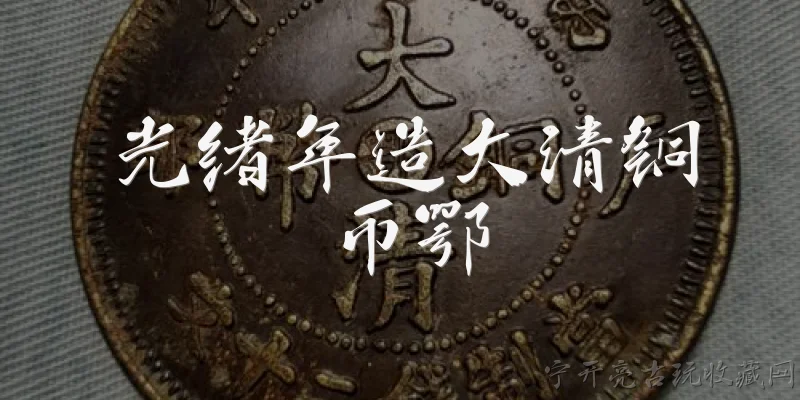
A: The Guangxu Era Da Qing Copper Coin from the Hubei Mint refers to copper coins struck in Hubei Province during the late Qing Dynasty under Emperor Guangxu, likely between 1902 and 1908. According to the 'Illustrated Catalog of Modern Chinese Coins' by the China Financial Publishing House, these coins typically feature a central dragon motif on the obverse with the inscription 'Da Qing Tong Bi' and 'Guangxu Nian Zao,' and a denomination such as 'Dang Shi' on the reverse. The Hubei Mint, established in Wuchang, was a key facility for modern coinage, producing these coins to standardize currency and address copper shortages, reflecting the empire's monetary reforms.
Q: Where was the Hubei Mint located and what was its role in producing Guangxu Era Da Qing Copper Coins?
A: The Hubei Mint was located in Wuchang, Hubei Province, China, and operated during the late Qing Dynasty. According to the 'History of Chinese Currency' published by the People's Bank of China, it was established in 1893 as part of the Self-Strengthening Movement to modernize China's currency system. The mint played a pivotal role in producing Guangxu Era Da Qing Copper Coins, starting around 1902, to combat the scarcity of small change and foreign coin dominance. It utilized imported machinery from Europe and adhered to imperial standards, issuing various denominations like 10 and 20 cash, which facilitated local trade and reflected Hubei's industrial advancement.
Q: What are the key design features of the Guangxu Era Da Qing Copper Coin from the Hubei Mint?
A: Key design features of the Guangxu Era Da Qing Copper Coin from the Hubei Mint include a front (obverse) side with a central five-clawed dragon surrounded by the Chinese characters 'Da Qing Tong Bi' and 'Guangxu Nian Zao,' symbolizing imperial authority. The back (reverse) side displays the denomination, such as 'Dang Shi' (10 cash), along with Manchu script and the mint mark 'E' for Hubei. The 'Catalog of Chinese Coins' by the Shanghai Museum notes these elements were standardized to ensure authenticity and uniform weight, often around 7.4 grams for 10-cash coins, highlighting the Qing government's efforts to centralize coinage production.
Q: Why were Guangxu Era Da Qing Copper Coins minted at the Hubei Mint during the late Qing Dynasty?
A: Guangxu Era Da Qing Copper Coins were minted at the Hubei Mint during the late Qing Dynasty primarily to address economic challenges such as coin shortages and the influx of foreign currency. According to the 'Monetary History of China' by the China Financial Press, the Qing government initiated copper coin production in response to the decline of silver and the need for stable small-denomination currency for daily transactions. The Hubei Mint, operational from 1902, produced these coins to standardize weights, reduce counterfeiting, and support regional trade. This was part of broader reforms to modernize China's fiscal system and assert economic sovereignty amid foreign influence.
Q: What is the historical significance of the Guangxu Era Da Qing Copper Coin from the Hubei Mint?
A: The historical significance of the Guangxu Era Da Qing Copper Coin from the Hubei Mint lies in its role as a symbol of China's late-Qing monetary modernization and resistance to foreign economic control. According to the 'Encyclopedia of Chinese Numismatics' by the National Library of China, these coins, minted from 1902 to 1908, represented a shift from traditional cast coins to machine-struck currency, enhancing efficiency and uniformity. They were instrumental in stabilizing local economies in Hubei and beyond, reflecting the Self-Strengthening Movement's goals. Today, they are valued artifacts in numismatics, illustrating the empire's transition and industrial progress during a tumultuous era.
Dialogue about
Common scenarios of "Guangxu Era Da Qing Copper Coin Hubei Mint"
【Numismatist】 Hello everyone, today we're discussing the Guangxu Era Da Qing Copper Coin from the Hubei Mint. This coin is a significant artifact from the late Qing Dynasty. What can you tell me about its history?
【Historian】 The Guangxu Era Da Qing Copper Coin was minted during the reign of Emperor Guangxu, around 1900-1906. The Hubei Mint was one of the first to produce these modern copper coins as part of the late Qing monetary reforms.
【Collector】 I've always been fascinated by the design. The obverse features the inscription 'Da Qing Tong Bi' and 'Guangxu Nian Zao', while the reverse has a dragon motif. Can you explain the symbolism?
【Numismatist】 Certainly. The dragon represents imperial power and good fortune. The characters 'Da Qing Tong Bi' mean 'Great Qing Copper Coin', and 'Guangxu Nian Zao' indicates it was made during Emperor Guangxu's reign. The Hubei Mint mark is usually on the reverse, often as 'E' or 'Hubei'.
【Historian】 These coins were introduced to combat the shortage of copper cash and to standardize currency. The Hubei Mint was established in 1893 and became a major producer of copper coins and silver dollars.
【Collector】 I've seen variations in the dragon design and the size of the characters. Are there different types or errors that collectors should look for?
【Numismatist】 Yes, there are several varieties. For example, some have a large dragon, others a small dragon. There are also variations in the English lettering on the reverse, such as 'HU-PEH' or 'HUPOO'. Mint errors like double strikes or off-center strikes can increase value.
【Historian】 The Hubei Mint produced coins not only for Hubei but also for other provinces. The Guangxu copper coins were minted in large quantities, but today, well-preserved specimens are scarce.
【Collector】 What about the metal composition? I've heard some are made of red copper, others of brass. Does that affect rarity?
【Numismatist】 Most are red copper (copper with a small amount of tin and lead), but some trial pieces were made of brass. Red copper is more common, but brass varieties from Hubei are rarer and more valuable.
【Historian】 The mintage figures are not fully documented, but it's estimated that millions were struck. However, many were melted down later, so survival rates are lower.
【Collector】 I have a coin with a misaligned dragon and a rotated reverse. Is that a known variety?
【Numismatist】 Yes, rotated dies are a known error. It happens when the die rotates during striking. Such errors are sought after by specialists and can fetch a premium.
【Historian】 These coins also reflect the turbulent times. The Qing Dynasty was declining, and the coinage reforms were an attempt to modernize. The Hubei Mint was at the forefront of that.
【Collector】 What's the best way to authenticate one? There are many counterfeits on the market.
【Numismatist】 Look for consistent weight (usually around 7.5 grams for a 10 cash coin), correct die details, and natural patina. Counterfeits often have soft details or incorrect metal composition. Professional grading is recommended.
【Historian】 Also, check the edge. Original coins have a plain edge or a reeded edge? Actually, most Hubei copper coins have a plain edge, but some patterns have reeded edges.
【Collector】 Thank you. I think I'll send my coin to a grading service. This has been very informative.
【Numismatist】 You're welcome. The Guangxu Era Da Qing Copper Coin from Hubei Mint is a fascinating piece of history, and it's great to see collectors preserving it.
【Historian】 Indeed. These coins are not just money; they're tangible links to China's late imperial past. Happy collecting!