Appreciation of Chinese Calligraphy:What makes Chinese calligraphy worthy of appreciation as an art form?
Q: What makes Chinese calligraphy worthy of appreciation as an art form?
A: Chinese calligraphy is worthy of appreciation because it transforms written language into a visual art that embodies rhythm, balance, and emotion. Unlike ordinary handwriting, calligraphy demands years of practice to master brush control, ink density, and stroke order. Each character becomes a miniature composition where the artist balances positive and negative space. The brush's flexibility allows for infinite variations in line thickness, speed, and pressure, conveying the calligrapher's mood and energy. Additionally, calligraphy reflects philosophical ideas from Daoism and Confucianism, such as harmony and spontaneity. Appreciating it means reading both the literal text and the aesthetic expression, making it a deeply intellectual and sensory experience that has endured for over two thousand years.
Q: How can a beginner start appreciating different styles of Chinese calligraphy?
A: A beginner can start by learning the five major scripts: seal, clerical, cursive, running, and regular. Begin with regular script because its clear, separate strokes make structure easy to see. Visit museums or online galleries to compare works by masters like Wang Xizhi and Yan Zhenqing. Notice how cursive script emphasizes flow and abstraction, while clerical script features flattened, angular strokes. Practice basic brush holding and simple characters to feel the rhythm. Read about the historical context of each style—for example, how running script became popular for personal letters. Finally, focus on three elements: brushwork (line quality), structure (character proportion), and composition (overall arrangement). With regular exposure, your eye will naturally develop discrimination and deeper enjoyment.
Q: What role does the brush and ink play in the appreciation of Chinese calligraphy?
A: The brush and ink are central to appreciating Chinese calligraphy because they determine the expressive range of each stroke. A traditional brush made of animal hair tapers to a fine point, allowing the calligrapher to create lines that shift from razor-thin to boldly thick in a single motion. Ink is not merely black; its dilution affects texture and mood—dry ink suggests speed or roughness, while wet ink conveys smoothness and weight. Appreciators look for the 'flying white' effect, where the brush skips over paper, leaving streaks that reveal the artist's energy. The paper's absorbency also matters, as it interacts with ink to create unintended but beautiful variations. Together, brush and ink turn writing into a dynamic performance captured on paper, inviting viewers to trace the artist's hand movement and emotional state.
Q: How does the composition of a calligraphy piece affect its overall appreciation?
A: Composition in Chinese calligraphy affects appreciation by guiding the viewer's eye and creating visual harmony. Unlike Western painting, calligraphy often fills vertical columns from right to left, with characters balanced in size, spacing, and weight. A skilled calligrapher varies character dimensions to avoid monotony—large characters anchor the piece, while small ones add delicacy. Negative space (the white paper) is as important as the black ink; it provides breathing room and rhythm. Seals and colophons (later inscriptions) can also become part of the composition, adding historical layers. Appreciators evaluate whether the overall layout feels dynamic yet stable, whether the first and last characters echo each other, and whether the line of text flows like a river. Good composition transforms a sequence of characters into a unified visual poem.
Dialogue about
Common scenarios of "Appreciation of Chinese Calligraphy"
【Teacher Li】 Good morning, everyone. Today we're going to explore the art of Chinese calligraphy. Calligraphy is not just writing; it's a profound expression of culture and emotion.
【Student Wang】 Teacher Li, I've always been fascinated by calligraphy, but I find it hard to appreciate the different styles. Where should I start?
【Teacher Li】 That's a great question, Wang. Let's begin with the five major script types: Seal, Clerical, Cursive, Running, and Regular. Each has its own aesthetic and historical context.
【Student Chen】 I've heard that Regular Script is the most basic. Is that true?
【Teacher Li】 Yes, Chen. Regular Script, or Kaishu, is often the foundation because its clear structure helps beginners understand stroke order and balance. But appreciation goes beyond that; it's about the energy and rhythm in each stroke.
【Student Wang】 So when I look at a piece of calligraphy, what should I pay attention to first?
【Teacher Li】 Start with the overall composition. Notice the balance of black ink and white space, the flow of the lines, and the variation in stroke thickness. Then, look at individual characters: their structure, the beginning and ending of strokes, and the artist's unique touch.
【Student Chen】 I've seen some cursive works that look very messy. How can I appreciate those?
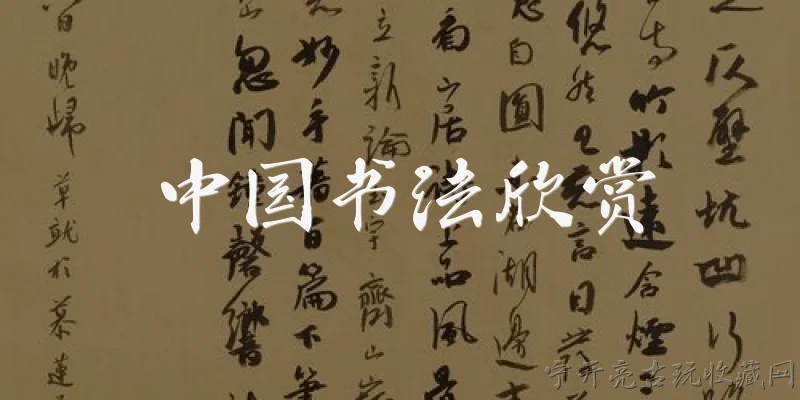
【Teacher Li】 Cursive script, or Caoshu, is indeed abstract. It emphasizes speed and fluidity, often expressing the artist's emotions. To appreciate it, try to feel the rhythm and energy, and compare it to other works by the same artist or in the same style.
【Student Wang】 Are there any famous calligraphers we should know?
【Teacher Li】 Absolutely. Wang Xizhi is considered the Sage of Calligraphy, especially for his Running Script. His 'Lantingji Xu' is a masterpiece. Other greats include Yan Zhenqing, Liu Gongquan, and Huaisu.
【Student Chen】 What makes Wang Xizhi's work so special?
【Teacher Li】 His calligraphy combines grace, strength, and naturalness. Each stroke is alive, and the characters flow harmoniously. It's said he achieved a perfect balance between technique and spontaneity.
【Student Wang】 I see. So appreciation involves understanding the artist's skill and the cultural context.
【Teacher Li】 Exactly. Calligraphy is deeply connected to literature, philosophy, and even politics. For example, Yan Zhenqing's works reflect his loyal and upright character.
【Student Chen】 How can we practice appreciation? Should we try to copy the works?
【Teacher Li】 Copying, or linmo, is a traditional way to learn and appreciate. By imitating, you internalize the strokes and feel the artist's intention. But also, visit exhibitions and read about the history.
【Student Wang】 I'll start with Regular Script and then explore others. Thank you, Teacher Li.
【Student Chen】 Yes, thank you. I'm excited to look at calligraphy with new eyes.
【Teacher Li】 You're welcome. Remember, appreciation is a journey. The more you look, the more you'll see. Enjoy the beauty of Chinese calligraphy!