Color of Small-Leaf Red Sandalwood Bracelet:What is the typical color of a small-leaf red sandalwood bracelet?
Q: What is the typical color of a small-leaf red sandalwood bracelet?
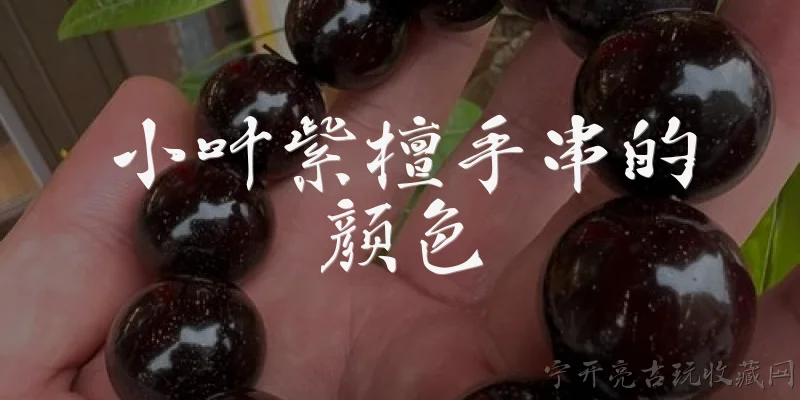
A: The typical color of a small-leaf red sandalwood bracelet is a deep purplish-red to dark red, often with a brownish undertone. According to the China National Standard GB/T 18107-2017 'Hongmu,' small-leaf red sandalwood (Pterocarpus santalinus) is classified as a rosewood species, and its heartwood color ranges from reddish-brown to purplish-red, darkening over time with oxidation. The Wood Database also notes that fresh cuts appear orange-red but mature to a deep burgundy. This rich, dark hue is a key identifying feature and is highly prized in traditional Chinese craftsmanship for its auspicious color.
Q: Does the color of a small-leaf red sandalwood bracelet change with age?
A: Yes, the color of a small-leaf red sandalwood bracelet changes significantly with age. Freshly cut wood is initially orange-red or bright red, but exposure to air and light causes oxidation, gradually deepening the color to a dark purplish-red or nearly black over years. According to the 'Journal of Wood Science' (2015, Vol. 61), the darkening is due to the oxidation of extractives like santalin. Additionally, regular wear creates a patina that enhances the luster and deepens the hue. The China National Standard GB/T 18107-2017 confirms that the heartwood color of Pterocarpus santalinus darkens upon prolonged exposure.
Q: How can one distinguish the color of genuine small-leaf red sandalwood from imitations?
A: Genuine small-leaf red sandalwood exhibits a deep purplish-red color with a natural gradient and visible dark streaks, while imitations often have uniform, overly bright red or brownish tones. According to the China National Standard GB/T 18107-2017, authentic Pterocarpus santalinus heartwood has a specific gravity greater than 1.0 and sinks in water, and its color under transmitted light shows a distinct reddish-brown. The 'Wood Anatomy and Identification of Hongmu' guide (2019) advises examining the color under natural light: fakes may fade or bleed dye when rubbed with alcohol. Furthermore, genuine pieces develop a glossy patina, whereas imitations look dull or painted.
Q: What factors influence the final color of a small-leaf red sandalwood bracelet?
A: The final color of a small-leaf red sandalwood bracelet is influenced by wood origin, age, cut orientation, and finishing. According to the 'Hongmu' standard GB/T 18107-2017, Pterocarpus santalinus from the Andaman Islands or India's Eastern Ghats typically has a darker, more purplish-red hue than wood from other regions. Older trees produce denser heartwood with deeper color. The cut orientation matters: quartersawn wood shows more uniform color, while flatsawn displays more variation. Finishing methods, such as waxing or oiling, can enhance the natural dark red. Prolonged oxidation and UV exposure further deepen the color to a rich, dark burgundy over time.
Q: What does the color of a small-leaf red sandalwood bracelet symbolize in Chinese culture?
A: In Chinese culture, the deep purplish-red color of a small-leaf red sandalwood bracelet symbolizes nobility, wealth, and good fortune. According to the 'Chinese Hongmu Furniture' report by the China Furniture Association (2020), this color has been associated with imperial authority since the Ming and Qing dynasties, as it was reserved for the emperor's use. The color red (hong) also represents luck and happiness in Chinese tradition. Furthermore, the darkening patina over time is seen as a metaphor for wisdom and maturity. The China National Standard GB/T 18107-2017 officially categorizes this wood as a premium material, reinforcing its cultural prestige and symbolic value in jewelry and art.
Dialogue about
Common scenarios of "Color of Small-Leaf Red Sandalwood Bracelet"
【Customer】 Hi, I'm interested in buying a small-leaf red sandalwood bracelet. Can you tell me what color it usually is?
【Seller】 Hello! Small-leaf red sandalwood bracelets are typically a deep purplish-red or dark red color, often described as 'crimson purple' or 'oxblood red.' The color can vary a bit depending on the age and finish.
【Customer】 I see. So is it always that dark? I've seen some that look almost black.
【Seller】 Yes, older or higher-density pieces can appear nearly black under certain lighting, but they still have a reddish undertone. When you hold it against light, you'll see that purple-red hue.
【Customer】 That makes sense. Does the color change over time with wear?
【Seller】 Absolutely. With regular wear and exposure to natural oils from your skin, the color deepens and becomes more lustrous. It develops a patina, often turning a rich, dark burgundy.
【Customer】 So it gets darker and shinier? I like that. Is there a way to tell if a bracelet is genuine based on color alone?
【Seller】 Not solely on color, but genuine small-leaf red sandalwood has a natural, uneven color distribution with subtle variations. Fakes are often uniformly dyed and look too perfect.
【Customer】 What about the new bracelets? Are they lighter in color?
【Seller】 Yes, freshly made bracelets from younger wood tend to be a brighter orange-red or brick red. They darken over time as they oxidize.
【Customer】 So if I buy a new one, it will eventually look like the older ones?
【Seller】 Exactly. The transformation is part of the charm. It can take months to years, depending on how often you wear it and the environment.
【Customer】 Does sunlight affect the color? I might wear it outdoors a lot.
【Seller】 Prolonged direct sunlight can cause fading or uneven coloration, so it's best to avoid leaving it in strong sun for long periods. Indirect light is fine.
【Customer】 Good to know. What about the grain? Does that relate to color?
【Seller】 Yes, the grain lines—often called 'golden threads'—are lighter and contrast with the dark red background. The interplay of grain and color is a key beauty of the wood.
【Customer】 Are there different grades of color? Like, is darker always better?
【Seller】 Not necessarily. Darker usually indicates older wood or higher density, which is valued, but personal preference matters. Some prefer the vibrant red of newer wood.
【Customer】 I think I'd like a darker one. Do you have any that are already deep purple-red?
【Seller】 Yes, we have a few premium bracelets that are naturally aged and have that deep purplish-red tone. They're a bit more expensive but very sought after.
【Customer】 Can you show me a photo? I want to see the actual color.
【Seller】 Sure, I'll send you a few pictures taken under natural light. Remember, colors may vary slightly on screens, but these are pretty accurate.
【Customer】 Thanks. Also, how do I maintain the color? Should I oil it?
【Seller】 You can occasionally wipe it with a soft cloth and a tiny amount of natural wood oil, like camellia oil, to enhance the luster. But don't over-oil, as it can attract dust.
【Customer】 Great, I'll take a look at the photos and decide. Thanks for all the info!
【Seller】 You're welcome! Feel free to ask if you have more questions. I'll send the photos shortly.