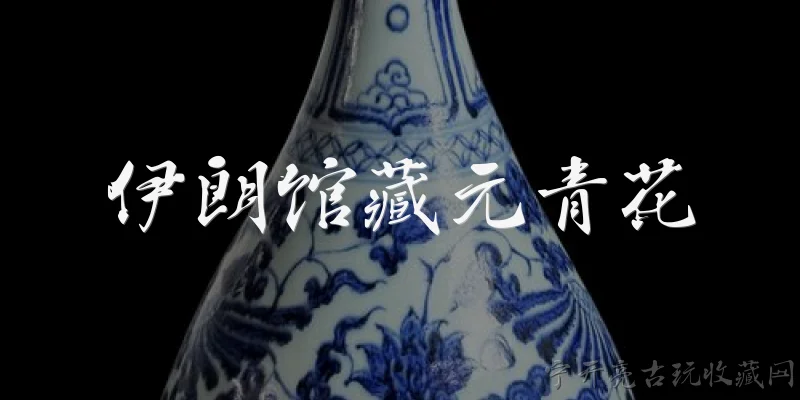
How to Identify Qing Dynasty Blue and White Porcelain:What are the key visual characteristics of Qing Dynasty blue and white porcelain?
Q: What are the key visual characteristics of Qing Dynasty blue and white porcelain?
A: Identifying Qing Dynasty blue and white porcelain begins with understanding its visual hallmarks. The blue pigment, or cobalt, evolved over time: early Qing pieces often used a vibrant, almost violet-blue imported cobalt, while later pieces shifted to a more subdued, grayish-blue domestic cobalt. The glaze is typically thick, glossy, and slightly bluish or pure white. Painted decorations are usually precise and detailed, with landscapes, figures, floral motifs, and mythical creatures rendered in fine lines. The porcelain body is fine-grained, pure white, and often thinner than Ming wares, especially during the Kangxi period. Another clue is the foot rim: it is usually smoothly cut, slightly rounded, and free of grit. Additionally, the overall proportions are elegant and balanced. By contrast, later reproductions often have a glassier glaze, muddy blue tones, or clumsy brushwork. Pay close attention to the way the blue pigment sits in the glaze—genuine Qing pieces show a subtle halo effect or 'heaping and piling' in early examples, while fakes may look flat or overly uniform.
Q: How can I date a piece of Qing Dynasty blue and white porcelain by its mark and reign?
A: The reign mark on the base is a crucial dating tool, but it must be interpreted carefully. Qing Dynasty blue and white porcelain typically bears a six-character or four-character reign mark in underglaze blue, written in kaishu (regular script) or zhuanshu (seal script). For example, Kangxi marks are often written in a bold, vigorous kaishu style, while Yongzheng marks tend to be more delicate and precise. Qianlong marks are usually very neatly written. However, many later pieces—especially 19th-century and modern reproductions—bear apocryphal marks of earlier emperors. To date accurately, compare the mark's calligraphy, the color of the blue, and the glaze with known examples. Also note that imperial wares from the early Qing (Kangxi, Yongzheng, Qianlong) are generally finer than later Guangxu or Xuantong pieces. Sometimes a piece has no reign mark but still dates to the Qing period, especially export or folk wares. In such cases, rely on the overall style, pigment, and shape. Remember that a mark alone is not definitive; it must be consistent with the piece's physical characteristics.
Q: What common mistakes should I avoid when identifying Qing Dynasty blue and white porcelain?
A: One of the biggest mistakes is relying solely on the reign mark. Many forgeries and later pieces carry fake Qing marks, so always assess the entire object. Another error is assuming all Qing blue and white is identical; there is huge variation across the Kangxi, Yongzheng, Qianlong, Jiaqing, Daoguang, and later reigns. Pigment color, glaze thickness, and painting style changed significantly. Also, avoid being fooled by 'heaping and piling'—a feature of early Ming and some early Qing wares—as modern fakes can simulate it. Do not ignore the foot and base: authentic Qing pieces often have a slightly yellowish or orange-red unglazed foot, while fakes may show a stark white or chemically treated surface. Additionally, condition matters: chips, cracks, and repairs affect value but also provide clues about age. Finally, beware of stories or provenance without documentation. If possible, use UV light to check for repairs and compare with museum references. Consulting an expert or using scientific testing, such as thermoluminescence, can help, but visual experience remains key.
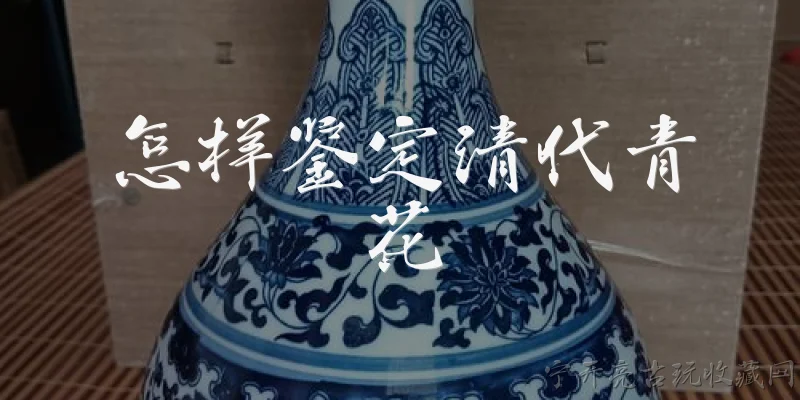
Dialogue about
Common scenarios of "How to Identify Qing Dynasty Blue and White Porcelain"
【Expert】 Welcome, everyone. Today we're going to discuss how to identify Qing Dynasty blue and white porcelain. This is a vast topic, but we'll cover the key points.
【Novice】 I've always been fascinated by Qing blue and white porcelain, but I find it hard to tell the difference between genuine pieces and reproductions. Where should I start?
【Expert】 First, it's essential to understand the historical context. The Qing Dynasty had several distinct periods, each with its own characteristics. The most famous are the Kangxi, Yongzheng, and Qianlong periods.
【Novice】 So, each period has its own style? How can I differentiate them?
【Expert】 Yes. For example, Kangxi blue and white is known for its vibrant blue, often with a slight purple hue, and the porcelain body is usually thick and solid. Yongzheng pieces are more refined, with a softer blue and thinner body. Qianlong wares are often more elaborate and sometimes combine blue and white with other colors.
【Novice】 That's helpful. What about the marks on the bottom? I often see reign marks, but I've heard they can be misleading.
【Expert】 Absolutely. Reign marks are important, but they can be counterfeited. A genuine Kangxi mark, for instance, is usually written in a precise, calligraphic style, often with six characters in two columns. But later periods often copied earlier marks, so you must also consider the overall style and quality.
【Novice】 So, I shouldn't rely solely on the mark. What other features should I examine?
【Expert】 The glaze is crucial. Qing glazes are typically smooth and have a subtle sheen. Also, look at the painting: genuine pieces have free and natural brushwork, while fakes often appear stiff or overly precise. The cobalt blue itself can vary; natural cobalt has impurities that create 'heaping and piling' effects, which are hard to replicate.
【Novice】 Heaping and piling? Can you explain that?
【Expert】 It's a term used to describe the unevenness in the blue pigment where it appears to pile up in certain areas, creating a darker, mottled effect. This is due to the natural impurities in the cobalt ore. Modern synthetic cobalt is more uniform, so fakes often lack this characteristic.
【Novice】 I see. Are there any other telltale signs, like the shape or foot ring?
【Expert】 Yes, the shape and proportions are important. Qing pieces often have elegant curves and balanced forms. The foot ring is another key: genuine pieces usually have a well-defined foot ring with a smooth, rounded edge, while fakes might have a sharp or poorly finished foot.
【Novice】 What about the clay body? I've heard that the quality of the porcelain paste can indicate authenticity.
【Expert】 Correct. Qing porcelain is made from a fine, white clay that is well-levigated, resulting in a smooth, dense body. Under a magnifying glass, you might see a slight orange-peel texture on the glaze, but the body itself should be free of impurities. Fakes often use coarser clay.
【Novice】 So, to sum up: I should look at the color, brushwork, glaze, mark, shape, foot, and body. That's a lot to remember!
【Expert】 It is, but with practice, it becomes second nature. Also, handling genuine pieces or visiting museums can train your eye. And remember, if something seems too good to be true, it probably is.
【Novice】 Are there any common mistakes that beginners make?
【Expert】 One common mistake is overemphasizing the reign mark. Another is ignoring the importance of the overall feel. Sometimes, a piece just 'feels' wrong, even if individual features seem correct. Also, be wary of pieces that are heavily restored or damaged, as they can hide flaws.
【Novice】 Thank you so much for the detailed explanation. I feel more confident now. I'll start by studying the Kangxi period pieces first.
【Expert】 That's a great approach. The Kangxi period is a good benchmark. Remember, authentication is a skill that takes time. Happy collecting!