Republic-era inlaid desk:What is a Republic-era inlaid desk?
Q: What is a Republic-era inlaid desk?
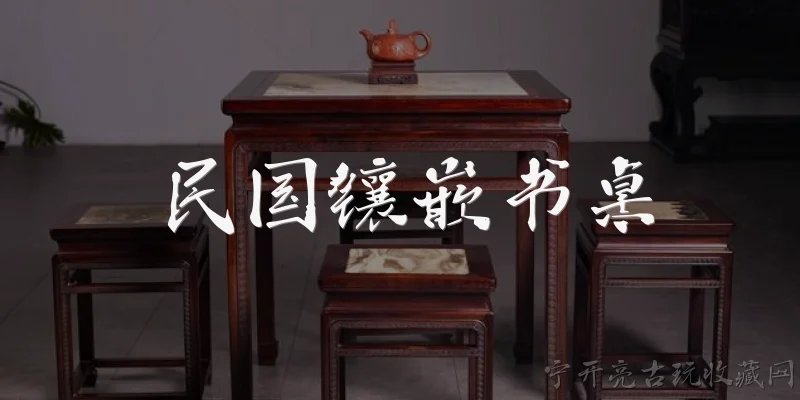
A: A Republic-era inlaid desk refers to a piece of furniture produced during the Republic of China period (1912–1949). It typically features intricate inlay work, often using materials like mother-of-pearl, ivory, or different woods to create decorative patterns on the desk surface, drawers, or legs. These desks blend traditional Chinese craftsmanship with Western influences, reflecting the cultural fusion of the era. They are valued for their historical significance and artistic detail, often considered collectibles in the antique furniture market.
Q: What materials were commonly used in Republic-era inlaid desks?
A: Republic-era inlaid desks commonly used a variety of materials for both the base and the inlay. The desk itself was often made of hardwood such as rosewood, mahogany, or walnut. Inlay materials included mother-of-pearl, ivory, bone, jade, colored stones, and contrasting woods like boxwood or ebony. These materials were cut into thin pieces and set into recesses in the wood surface to create motifs such as flowers, birds, landscapes, or geometric patterns. The choice of materials depended on the intended quality and style, with mother-of-pearl and ivory being particularly popular for their lustrous appearance.
Q: What are the typical design characteristics of a Republic-era inlaid desk?
A: Typical design characteristics of a Republic-era inlaid desk include a rectangular or slightly curved top, often with a central writing surface and small drawers along the sides. The inlay work is usually the focal point, featuring detailed scenes or symbolic motifs. Legs may be straight, cabriole, or tapered, reflecting a blend of Chinese and Western styles. Some desks have a gallery rail at the back or sides, and hardware such as brass pulls or locks. The overall aesthetic combines the elegance of traditional Chinese furniture with the functionality of Western desks, resulting in a unique hybrid style.
Q: How can one identify an authentic Republic-era inlaid desk?
A: Identifying an authentic Republic-era inlaid desk requires examining several factors. First, check the inlay technique: authentic pieces have hand-cut inlays with slight irregularities, while modern reproductions may use laser cutting. Look for patina on the wood and inlay, indicating age. The joinery, such as dovetails or mortise-and-tenon, should be hand-crafted. Hardware may be original brass with a worn finish. Also, research the maker or workshop if marked. Consulting an antique furniture expert or appraiser can help authenticate the piece, as reproductions are common. Provenance and documentation also add confidence.
Q: What is the current market value of Republic-era inlaid desks?
A: The market value of Republic-era inlaid desks varies widely based on condition, craftsmanship, materials, and provenance. Common pieces in good condition might sell for a few thousand dollars, while exceptional examples with fine mother-of-pearl inlay, attributed to known workshops, or with historical significance can fetch tens of thousands. Auction records show prices ranging from $2,000 to over $50,000. Factors that increase value include complete inlay, original finish, and rarity. However, the market can be volatile, and buyers should consult recent auction results or appraisals for accurate pricing.
Words of experience
Common scenarios of "Republic-era inlaid desk"
【Collector】 I recently acquired a Republic-era inlaid desk. The marquetry is stunning—mother-of-pearl and stained horn on rosewood. What can you tell me about this style?
【Antiques Expert】 That sounds like a classic piece from the late Qing to early Republic period, around 1910s–1930s. The use of mother-of-pearl and horn inlay on rosewood was popular in Guangdong and Shanghai workshops, blending Chinese motifs with Western demand.
【Collector】 Interesting. The desk has a central panel with a landscape scene, and the borders have geometric patterns. Does that suggest a specific region?
【Antiques Expert】 Yes, the landscape inlay with geometric borders often points to Guangzhou (Canton) craftsmanship. They were known for intricate 'baitong' (white copper) and shell inlay, exporting to Europe and America. Does it have any maker's mark or label?
【Collector】 No label, but there's a faint stamp on the back: 'Kwan Wo'. Does that ring a bell?
【Antiques Expert】 Kwan Wo was a well-known furniture maker in Hong Kong and Canton in the early 20th century. They specialized in export furniture with Chinese decoration. A desk by Kwan Wo would be highly collectible, especially with inlay intact.
【Collector】 The inlay is mostly intact, but a few pieces of mother-of-pearl are missing on the right drawer. How does that affect value?
【Antiques Expert】 Condition is crucial. Missing inlay reduces value significantly, but if the rest is original and the stamp is authentic, it's still desirable. Restoration by a specialist can mitigate the loss, but always disclose it.
【Collector】 I see. What about the wood? It looks like rosewood, but it's quite dark. Could it be zitan?
【Antiques Expert】 Zitan is denser and darker, almost black-purple. If it's zitan, that would place it earlier, likely late Qing. But Republic-era export pieces often used rosewood (hongmu) stained darker to imitate zitan. Check the grain—zitan has a fine, almost invisible grain.
【Collector】 The grain is visible, so probably rosewood. The desk also has brass hardware—handles and escutcheons—with a patina. Are those original?
【Antiques Expert】 Brass hardware was standard on export furniture. Original hardware adds value. If the patina is even and matches the wood's wear, it's likely original. Replacements are common, so compare screw holes for signs of re-fitting.
【Collector】 Good point. I'll check the screws. The desk has a leather top, but it's badly worn. Should I replace it?
【Antiques Expert】 Leather tops were often added for writing comfort. If it's original, preserve it even if worn—replacing it can hurt authenticity. If it's a later addition, you could replace it with a period-appropriate leather, but keep the original if possible.
【Collector】 It seems original—the leather is tooled with a gold border. I'll leave it. Any tips on caring for the inlay?
【Antiques Expert】 Keep it away from direct sunlight and humidity swings. Dust with a soft brush; never use solvents. For missing pieces, consult a conservator who specializes in shell and horn inlay. They can color-match and adhere with reversible adhesives.
【Collector】 Thanks. I paid $2,500 for it. Was that reasonable?
【Antiques Expert】 If it's a genuine Kwan Wo piece with original inlay and hardware, $2,500 is a fair retail price, even with minor losses. At auction, it might fetch $1,500–$3,000 depending on condition and provenance. If you have documentation, value could be higher.
【Collector】 I have a receipt from an estate sale, but no provenance. Should I get it appraised?
【Antiques Expert】 Yes, for insurance and resale, a written appraisal from a specialist in Chinese export furniture is wise. They can authenticate the stamp and assess restoration costs. Also, research Kwan Wo's catalogues—some are archived in Hong Kong museums.
【Collector】 I'll do that. One last thing: the desk has a hidden compartment under the central drawer. Is that common?
【Antiques Expert】 Hidden compartments were popular in Chinese furniture, especially for valuables. In export pieces, they sometimes served as a novelty for Western buyers. It adds intrigue and value. Make sure it's original—check for matching wood and wear.