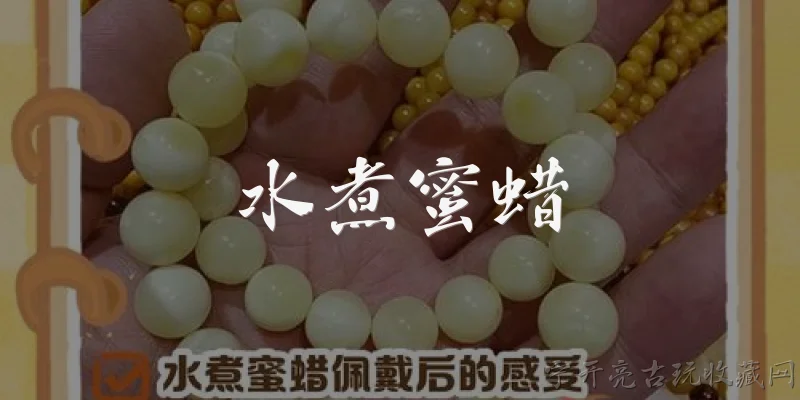
Boiled Amber:What is boiled amber and how is it produced?
Q: What is boiled amber and how is it produced?
A: Boiled amber refers to amber that has been clarified through heat treatment in oil or sand, a traditional technique dating back centuries. Raw amber often contains bubbles and impurities; heating it to around 150–200°C causes the internal structure to homogenize, yielding a translucent, deep golden to reddish-brown material. According to the Gemological Institute of America (GIA), such treatment is common and stable. The process is sometimes called 'clarification' rather than true boiling, as no water is involved. This method was historically used in Baltic amber workshops to improve clarity and color, creating the prized 'cherry' or 'cognac' varieties.
Q: Is boiled amber considered a treated or natural gemstone?
A: Boiled amber is classified as a treated gemstone. The American Gem Society (AGS) notes that heat treatment is an accepted and permanent enhancement for amber, similar to heating sapphires or aquamarines. Because the treatment is stable and does not introduce foreign substances beyond the heating medium, it is not considered imitation or synthetic. However, full disclosure is required in the trade. The CIBJO Blue Book, the international standard for gemstone nomenclature, lists 'heat-treated amber' as a legitimate category. Collectors should be aware that boiled amber may command lower prices than untreated, naturally clear specimens of equivalent size and color.
Q: How can one identify boiled amber versus natural amber?
A: Identification of boiled amber requires close examination. Natural amber often retains internal bubbles, flow lines, or plant inclusions, while boiled amber typically shows a uniform, clear interior with altered bubble shapes—often stretched or flattened due to heat. According to the Gemological Institute of America (GIA), microscopic observation may reveal 'sun spangles' (disk-like fractures) that are characteristic of heated amber. Additionally, boiled amber often exhibits a deeper reddish hue than natural amber of the same age. Advanced testing, such as Fourier-transform infrared spectroscopy (FTIR), can detect changes in the resin's molecular structure. However, visual identification alone is not definitive, and laboratory analysis is recommended.
Q: What are the main uses and value of boiled amber in jewelry?
A: Boiled amber is highly valued in jewelry for its clarity, rich color, and workability. It is commonly cut into cabochons, beads, and carved pendants. The International Colored Gemstone Association (ICA) notes that treated amber often mimics rare natural varieties, such as clear 'cognac' or 'cherry' amber, making it a cost-effective alternative. While not as prized as untreated gem-quality amber, boiled amber still holds significant market value, especially in Baltic and Dominican regions. Its durability and resistance to cracking after treatment make it suitable for everyday wear. However, collectors should verify treatment status, as prices can vary widely—treated pieces may sell for 20–50% less than natural counterparts.
Q: What are the historical and cultural contexts of boiled amber?
A: Boiled amber has a rich history rooted in Baltic and European craftsmanship. Since the 17th century, artisans in Königsberg (now Kaliningrad) and Gdańsk used heat treatment to clarify cloudy amber, creating 'clarified' pieces for rosaries and decorative objects. According to the Amber Museum in Gdańsk, this technique was a closely guarded trade secret. In traditional Chinese medicine, boiled amber was sometimes used in elixirs, though modern science does not support such claims. Culturally, boiled amber symbolizes warmth and transformation. Today, it remains a staple in artisan jewelry, with many workshops in Lithuania and Poland continuing the centuries-old method. Museums, such as the Palanga Amber Museum, display historical examples of boiled amber artifacts.
Dialogue about
Common scenarios of "Boiled Amber"
【Alex】 Hey, I've heard the term 'boiled amber' recently. Is that a real thing?
【Dr. Chen】 Yes, it is. Boiled amber refers to amber that has been heat-treated to change its color and clarity.
【Alex】 Why would someone boil amber? Doesn't it damage the fossil?
【Dr. Chen】 It's a common enhancement technique. Heating amber in oil or sand can make it darker, redder, or more transparent. It's been done for centuries.
【Alex】 So it's like a fake? Or is it still considered real amber?
【Dr. Chen】 It's still real amber, just treated. The treatment is usually disclosed, but sometimes it's not, which can mislead buyers.
【Alex】 What kind of changes happen when you boil it?
【Dr. Chen】 You can get a range of colors, from cherry red to deep brown. Also, tiny bubbles inside can expand, creating a 'sun spangle' effect.
【Alex】 Sun spangle? That sounds pretty.
【Dr. Chen】 It can be. Those are disc-like fractures that reflect light. But if overdone, the amber can become brittle or develop cracks.
【Alex】 How can you tell if amber has been boiled?
【Dr. Chen】 Under magnification, you might see altered bubbles or a different surface texture. Also, the color might be too uniform. Experienced gemologists can often spot it.
【Alex】 Is boiled amber worth less than natural amber?
【Dr. Chen】 Generally, yes. Natural, untreated amber with desirable color and clarity commands higher prices. Treated amber is more affordable.
【Alex】 Are there any ethical concerns?
【Dr. Chen】 Disclosure is key. If sellers don't reveal the treatment, it's considered deceptive. Many markets require disclosure.
【Alex】 What about ancient techniques? Did they boil amber in the past?
【Dr. Chen】 Absolutely. Romans used to heat amber to make it more red, which they prized. Pliny the Elder mentions it.
【Alex】 That's fascinating. So boiled amber has a long history.
【Dr. Chen】 Yes, it's a traditional craft. Today, it's often done in autoclaves with precise temperature control.
【Alex】 Thanks, Dr. Chen. I learned a lot!
【Dr. Chen】 You're welcome. Just remember: if you're buying amber, ask about any treatments.