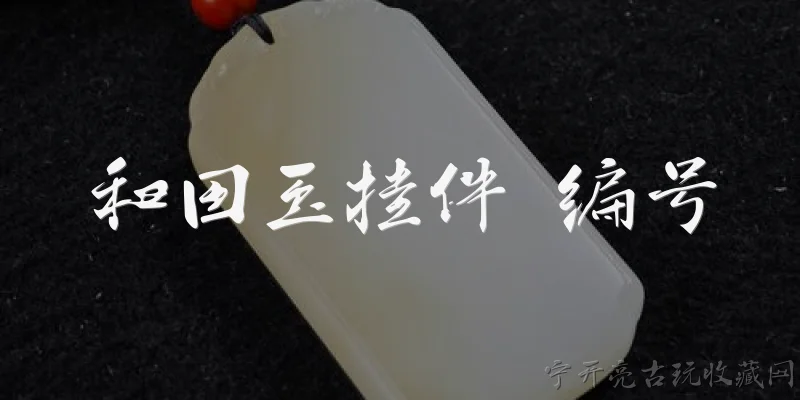
Hetian Jade Beast Head:What is the historical origin and cultural significance of Hetian Jade Beast Head carvings?
Q: What is the historical origin and cultural significance of Hetian Jade Beast Head carvings?
A: Hetian Jade Beast Head carvings trace their origins to ancient China, particularly flourishing during the Han, Tang, and Qing dynasties. Hetian jade, sourced from the Kunlun Mountains in Xinjiang, was highly prized for its creamy white tone and fine texture, often reserved for imperial and ritual use. Beast head motifs—depicting mythical creatures like dragons, lions, or taotie—were believed to ward off evil spirits, invoke protection, and symbolize power and authority. In Confucian thought, jade itself embodied virtues such as benevolence and righteousness, so a beast head carving combined moral ideals with supernatural guardianship. These objects served as architectural ornaments, sword fittings, incense burners, or personal talismans. Over centuries, the style evolved: Han pieces tend to be bold and abstract, while Qing examples are more intricate and naturalistic. Today, Hetian Jade Beast Heads are collectibles that reflect both artistic heritage and spiritual beliefs, bridging China's dynastic past with contemporary appreciation for jade craftsmanship.
Q: How can one distinguish authentic Hetian Jade Beast Head carvings from imitations or treated stones?
A: Authenticating a Hetian Jade Beast Head requires examining several physical properties. First, genuine Hetian jade has a waxy, soft luster rather than a glassy or plastic sheen. Under strong light, it shows a fine, interwoven fibrous structure, not uniform grains or bubbles. Second, color: authentic Hetian jade is typically milky white, sometimes with slight gray, green, or yellow tints, but never unnaturally bright or uniform—dyed imitations often concentrate color in cracks. Third, touch and weight: real jade feels cool, smooth, and dense; it warms slowly in the hand. Fourth, sound: tapping with a coin yields a clear, resonant chime, while fakes sound dull. Fifth, carving details: authentic old pieces show hand-tooled marks, subtle wear, and consistent patina, whereas modern machine copies look too precise or have fresh, harsh edges. Be wary of “heat-treated” or “bleached” jade sold as natural. For high-value pieces, professional gemological testing—refractive index, specific gravity, and infrared spectroscopy—is essential. Collectors should also research the seller’s reputation and provenance documents.
Q: What are the current market trends and value factors for antique Hetian Jade Beast Head carvings?
A: The market for antique Hetian Jade Beast Head carvings has seen strong demand, especially from Chinese collectors and museums, but prices vary widely based on authenticity, age, quality, and provenance. Top-tier pieces from the Han or Qing dynasty, carved from premium “mutton-fat” white jade, can fetch millions at auction. However, the majority of available items are later reproductions or lower-grade jade, often selling for hundreds to low thousands. Key value factors include: 1) Jade quality—color purity, translucency, and absence of cracks; 2) Craftsmanship—fine, detailed carving with smooth lines and correct proportions; 3) Age and historical relevance—imperial or documented pieces command premiums; 4) Condition—original patina, no repairs or restorations; 5) Provenance—auction records, family lineage, or museum exhibitions. Current trends show growing interest in smaller, wearable beast heads (pendants, rings) and themed collections. Beware of forgeries and “antique” treatments. Since 2020, online auctions and livestream sales have expanded access but also increased fraud risk. Investors should consult accredited appraisers and buy from reputable dealers with return policies.
Words of experience
Common scenarios of "Hetian Jade Beast Head"
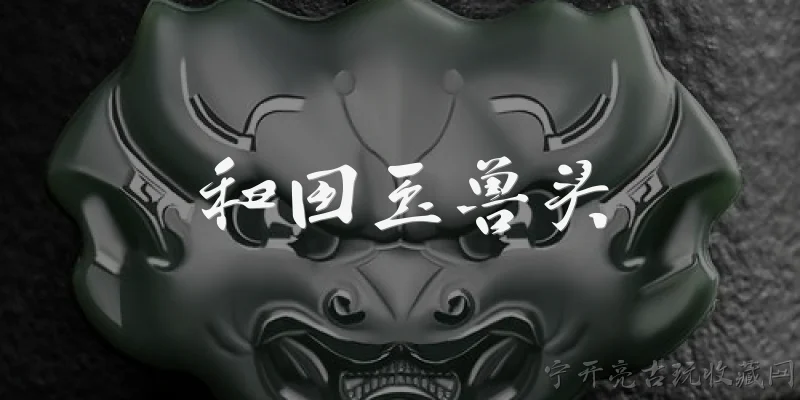
【Curator】 Welcome to the museum's special exhibition on Hetian jade. Today, we're focusing on a remarkable piece: the Hetian Jade Beast Head. This artifact dates back to the Han Dynasty and is carved from the finest Hetian jade.
【Visitor】 It's stunning! The details are so intricate. What exactly is a 'beast head' in this context?
【Curator】 In ancient Chinese art, a beast head often represents mythical creatures like dragons, lions, or qilin. They were used as architectural ornaments, on chariots, or as ritual objects to ward off evil spirits.
【Visitor】 I see. So this piece might have been attached to something? It has a hole at the back.
【Curator】 Exactly. The hole suggests it was likely a pendant or a fitting for a wooden structure. The jade's translucency and color indicate it's from the Hetian region in Xinjiang, which was highly prized.
【Visitor】 How can you tell it's Hetian jade and not another type?
【Curator】 Hetian jade is known for its nephrite composition, which gives it a soft, oily luster. Under magnification, we can see the fibrous structure typical of nephrite, and the color is a warm white with slight variations.
【Visitor】 What about the carving techniques? The eyes and teeth are very detailed.
【Curator】 The Han Dynasty was a peak period for jade carving. Artisans used simple tools like bamboo and abrasives to achieve such precision. The beast head shows a combination of relief and incised lines.
【Visitor】 Was this piece found in a tomb? What was its purpose?
【Curator】 Yes, it was excavated from a tomb in Shaanxi province. It likely served as a protective amulet for the deceased, or as a decorative element on a coffin. Beast heads were believed to guard against evil forces.
【Visitor】 That's fascinating. How does it compare to other jade beast heads from the same period?
【Curator】 This one is exceptional due to its size and the quality of the jade. Most are smaller and less detailed. The expression is fierce yet elegant, typical of Han aesthetics.
【Visitor】 Are there any similar pieces in other museums?
【Curator】 A few, but each has unique features. The one in the Palace Museum in Beijing is similar in style but made of a different jade variety. This piece is considered one of the finest examples.
【Visitor】 What about its condition? It seems well-preserved.
【Curator】 It is remarkably intact, with only minor wear on the edges. The jade's durability has helped it survive centuries. We've carefully cleaned and stabilized it for display.
【Visitor】 How do you handle such artifacts? Any special precautions?
【Curator】 We maintain strict temperature and humidity control, and handle it with gloves to avoid oils from skin. It's also displayed in a case with UV-filtered glass to prevent fading.
【Visitor】 Thank you for the detailed explanation. I have a much deeper appreciation for this piece now.
【Curator】 You're welcome. It's always a pleasure to share the history and craftsmanship of such treasures. Enjoy the rest of the exhibition!