
Traditional Chinese painting boats:What role do boats play in traditional Chinese landscape painting?
Q: What role do boats play in traditional Chinese landscape painting?
A: In traditional Chinese landscape painting, boats serve as essential compositional elements that convey harmony between nature and human life. Often depicted as small skiffs or fishing vessels gliding across misty rivers or serene lakes, they represent the human journey through the vastness of the natural world. Boats also symbolize solitude, freedom, and the transient nature of existence, reflecting Daoist and Buddhist philosophies. Their placement near water and mountains enhances depth and perspective, guiding the viewer's eye through the painting. Additionally, boats often imply the presence of scholars or fishermen, embodying ideals of reclusion and quiet contemplation.
Q: How are boats depicted in traditional Chinese painting techniques?
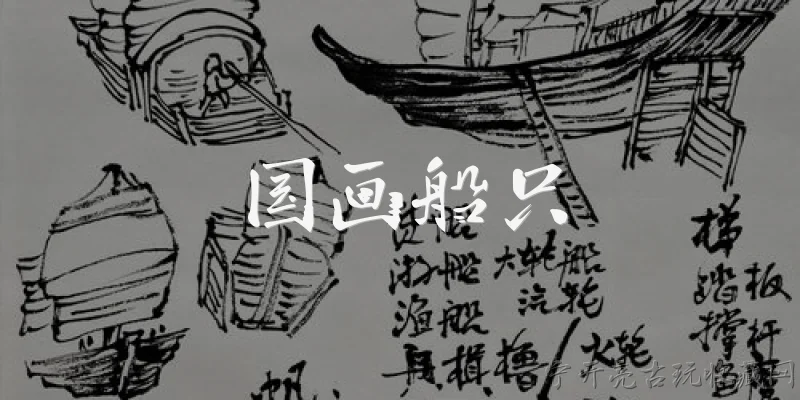
A: Traditional Chinese painters render boats using minimalist brushwork, often with just a few ink strokes to suggest form rather than detailed realism. The boat's hull, sail, and oars are typically drawn with varying ink tones, using the same calligraphic brush techniques applied to landscapes. Negative space plays a crucial role, as the empty areas around the boat evoke water and mist. Some artists use fine lines to indicate wooden planks or ripples, while others leave the boat as a silhouette. This approach aligns with the xieyi (freehand) style, emphasizing the essence and spirit of the subject over precise anatomical accuracy.
Q: What symbolic meanings are associated with boats in Chinese painting?
A: In Chinese painting, boats often symbolize the journey of life, transition, and the passage of time. A lone boat drifting on a river can represent the scholar's detachment from worldly affairs or the ephemeral nature of human existence. Fishing boats may allude to the virtuous fisherman, a common motif in Chinese poetry and art, who lives simply in harmony with nature. Boats also signify hope, as they carry travelers toward distant shores, or farewell, as they depart from loved ones. In Buddhist contexts, a boat can symbolize the ferry to enlightenment, carrying souls across the sea of suffering.
Q: Which famous Chinese paintings prominently feature boats?
A: Several masterpieces of traditional Chinese painting prominently feature boats. Zhang Zeduan's 'Along the River During the Qingming Festival' (Song dynasty) includes numerous boats on the Bian River, showcasing bustling commerce. Wang Meng's 'Dwelling in the Qingbian Mountains' (Yuan dynasty) features a small boat near a secluded retreat. Ma Yuan's 'On a Mountain Path in Spring' (Song dynasty) depicts a boatman on a misty river. Ni Zan's 'The Rongxi Studio' (Yuan dynasty) includes a solitary boat, reflecting his minimalist style. These works illustrate the boat's versatility as a narrative and symbolic device across different dynasties and artistic schools.
Q: How does the depiction of boats in Chinese painting differ from Western traditions?
A: In traditional Chinese painting, boats are typically integrated into the landscape as small, poetic elements that harmonize with the universe, often rendered with sparse brushwork and ample negative space. The focus is on mood and philosophical resonance rather than nautical accuracy. In contrast, Western painting, especially from the Renaissance onward, often portrays boats with realistic detail, emphasizing perspective, anatomy, and dramatic lighting, as seen in works by Turner or Monet. Chinese boats serve as metaphors for human existence within nature, while Western boats frequently act as subjects of exploration, trade, or romanticized seascapes. These differences reflect broader cultural attitudes toward nature and individuality.
Dialogue about
Common scenarios of "Traditional Chinese painting boats"
【Art Enthusiast】 I've been looking at traditional Chinese landscape paintings lately, and I keep noticing small boats. They seem so simple, yet they're everywhere. Why are boats such a recurring motif?
【Art Historian】 That's a great observation. In traditional Chinese painting, boats aren't just objects—they carry deep symbolic meaning. They often represent the journey of life, solitude, or the scholar's retreat from worldly affairs.
【Art Enthusiast】 So they're more about the idea than the actual vessel?
【Art Historian】 Exactly. Many literati painters used a lone boat with a fisherman or a scholar as a way to express their own feelings of detachment or reclusion. It's less about the boat and more about the human condition.
【Art Enthusiast】 I've noticed that the boats are often tiny compared to the mountains and rivers. Is that intentional?
【Art Historian】 Very intentional. The small scale emphasizes humanity's place within the vastness of nature. In Daoist and Buddhist thought, humans are but a small part of the cosmos, and the boat highlights that humility.
【Art Enthusiast】 That makes sense. Are there different types of boats in these paintings?
【Art Historian】 Yes, several. You'll see fishing boats, often with a solitary fisherman; ferryboats carrying scholars or travelers; and sometimes pleasure boats with figures drinking wine or composing poetry.
【Art Enthusiast】 I think I've seen paintings where the boat has a little canopy or a thatched roof. What's that about?
【Art Historian】 That's a common feature, especially in depictions of fishing boats or hermit's boats. The canopy provides shelter and suggests a simple, self-sufficient life. It also adds a cozy, intimate feel to the scene.
【Art Enthusiast】 Are there any famous paintings that prominently feature boats?
【Art Historian】 Absolutely. One classic example is 'Fisherman' by Wu Zhen from the Yuan dynasty. Also, many works by Ni Zan, like 'The Rongxi Studio,' include small boats. And in the Song dynasty, Ma Yuan's 'Angler on a Wintry Lake' is iconic.
【Art Enthusiast】 I'll look those up. What about the brushwork? How are boats typically painted?
【Art Historian】 They're usually rendered with minimal, expressive strokes. Artists use fine lines for the hull and sometimes a few washes of ink to suggest the water. The simplicity is key—too much detail would detract from the overall mood.
【Art Enthusiast】 So the boat is almost like a calligraphic gesture?
【Art Historian】 Yes, that's a good way to put it. In literati painting, every stroke carries meaning, and the boat is often painted with the same spontaneity as a character in cursive script.
【Art Enthusiast】 Do boats appear in all periods of Chinese painting, or are they more common in certain dynasties?
【Art Historian】 They appear throughout, but they became especially prominent in the Song and Yuan dynasties, when landscape painting flourished and literati culture emphasized retreat and introspection.
【Art Enthusiast】 What about the connection to poetry? I know many paintings have inscriptions.
【Art Historian】 Yes, boats often appear in poems as well. For instance, lines like 'a lone boat on the river, fishing in the cold snow' evoke the same imagery. Painters and poets shared a common vocabulary.
【Art Enthusiast】 So the boat is a bridge between painting and poetry?
【Art Historian】 Precisely. It's a visual trope that resonates with literary themes of exile, freedom, and harmony with nature. Many scholars would paint a boat to illustrate a poem or express their own sentiments.
【Art Enthusiast】 I find it fascinating how such a small element can carry so much weight. Thank you for explaining.
【Art Historian】 My pleasure. Next time you see a boat in a Chinese painting, look closely—it might be the key to understanding the entire piece.